Google DeepMind is a winner of the 2026 Gizmodo Science Fair for creating WeatherNext Cyclones, a highly accurate AI weather model that gives forecasters an extra day of warning.
The question
Can a single AI model accurately forecast both the track and intensity of tropical cyclones?
The results
Meteorologists rely on a variety of forecast models to predict and track tropical cyclones, and the emergence of AI has ushered in an entirely new class of tools. Whereas traditional physical models are built on the laws of physics, machine learning models use AI and historical data to extrapolate storm formation, intensification, and movement.
Forecasters have adopted several of these models in recent years, and their rapid gains in speed and performance have made them highly competitive with even state-of-the-art physical models. But after the 2025 Atlantic hurricane season, one clearly stood out.
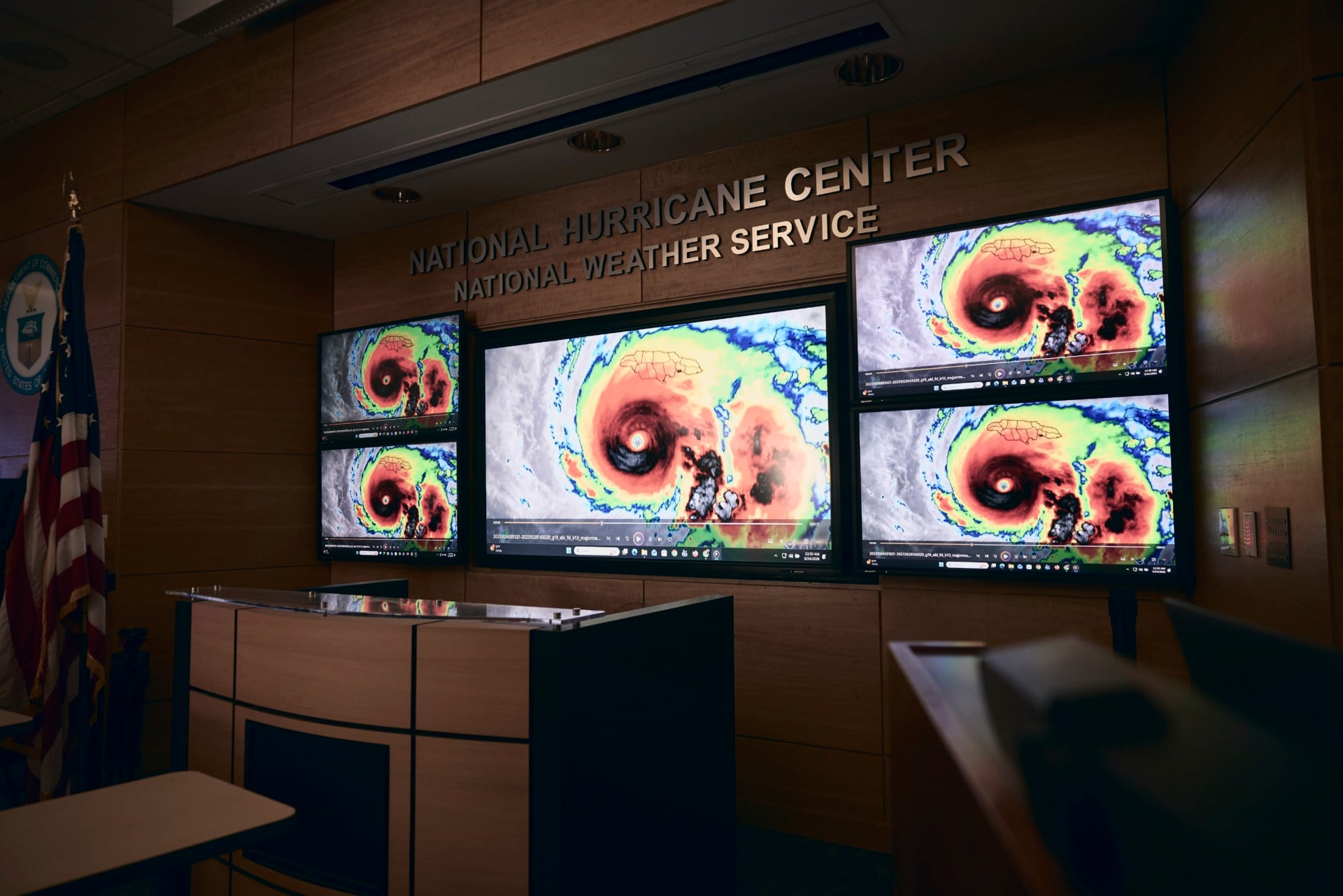
WeatherNext Cyclones, an AI forecast model developed by Google DeepMind, performed exceptionally well during its first operational run. For example, the model allowed the National Hurricane Center (NHC) to predict Hurricane Melissa’s rapid intensification and landfall in Jamaica with about 80% confidence five days in advance, rising to nearly 100% confidence three days before landfall.
“We had evaluated our model internally on historical forecasts, and we’re very rigorous with our evaluations. But even then, we didn’t know if we could really believe what we were seeing,” DeepMind research scientist Tom Andersson told Gizmodo. “Seeing the performance of our model in real-time on data that it had never seen before—we were frankly shocked by the performance.”
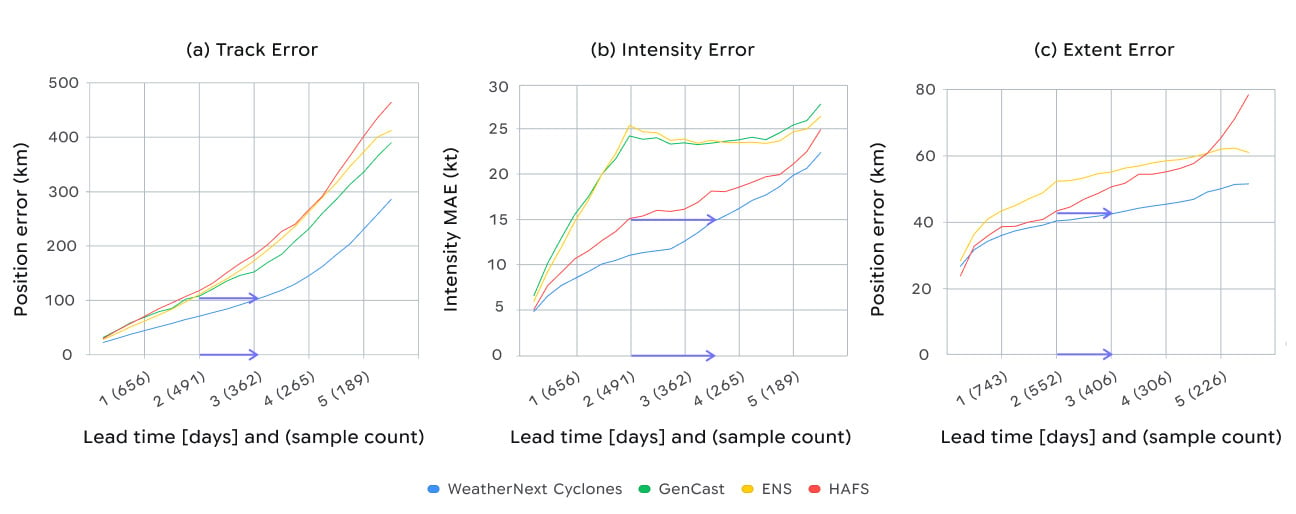
A study recently published in the journal Nature indeed showed that WeatherNext Cyclones achieves state-of-the-art accuracy in predicting a cyclone’s track, intensity, and wind structure. The WeatherNext team collaborated with experts at the NHC and other institutions to evaluate the model on historical data from 2023 to 2025 and found that, on average, it provides an extra day’s worth of predictive accuracy.
This marks a major leap forward. The researchers believe this improvement is roughly equivalent to the progress made by traditional hurricane forecasting over the past decade.
Why they did it
In the early days of developing the WeatherNext family of AI forecast models, “we were initially just trying to forecast everyday weather, so we trained an AI model that, given the weather today, predicts the weather tomorrow,” said Ferran Alet, staff research scientist manager at DeepMind. He and his colleagues soon found that the model was very good at predicting cyclone tracks but struggled to predict intensity.
This has long been a problem not just for AI models but for physical models as well. Global atmospheric currents steer a cyclone, but highly localized, fine-scale thermodynamic processes around the storm’s center drive its intensity. Due to these opposing scales, weather models have long struggled to accurately predict both at once.
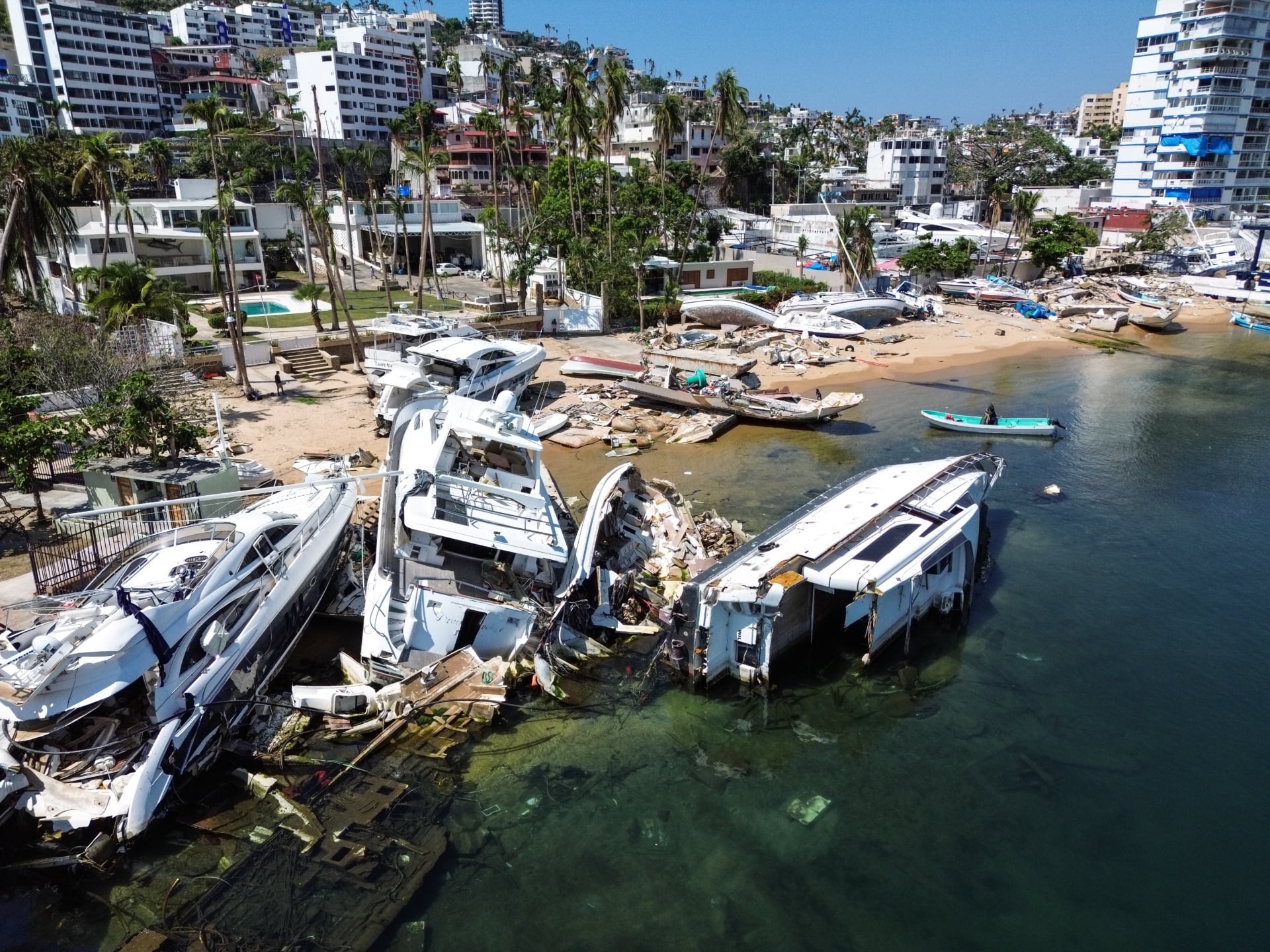
The consequences of this tradeoff were demonstrated by Hurricane Otis in 2023, which caught forecasters off-guard when physical models failed to predict its rapid intensification from a tropical storm to a Category 5 hurricane. When Otis made landfall on the Pacific coast of Mexico, communities were unprepared. The storm caused catastrophic damage and killed dozens.
At that time, “AI was even worse than physics-based models at predicting intensity, and it was also not believed to be good at extremes,” Alet explained. He and his colleagues developed WeatherNext Cyclones with the goal of creating an AI model that could accurately predict track, intensity, and extremes for tropical cyclones.
“We were very motivated to fix this problem, which we did by specializing our models to train on an expert database of historical tropical cyclones, and through that we were able to overcome some of those limitations and actually advance the science by about a decade,” Andersson said.
Why they’re a winner
As climate change drives more powerful tropical cyclones, predicting their track and intensity with greater lead time and accuracy has never been more critical. According to projections under 3.6 degrees Fahrenheit (2 degrees Celsius) of global warming, tropical cyclone intensities could increase by an average of 1% to 10% globally. Rainfall rates and bouts of rapid intensification are also projected to rise.
WeatherNext Cyclones has raised the bar for cyclone prediction in a warming world. In addition to overcoming the track-intensity tradeoff, it tackles another fundamental challenge in AI forecasting: the “gray swan” problem. Gray swan weather extremes are physically plausible but so rare that they are poorly represented in training datasets. That means AI models have a hard time predicting these highly destructive events, which is concerning given that climate change is leading to more of them.
By generating up to 1,000 possible scenarios, WeatherNext Cyclones can better capture these low-probability but potentially devastating storms, Andersson explained.
What’s more, WeatherNext Cyclones is accessible to communities on the frontlines of climate change that have historically lacked the resources and infrastructure required for traditional forecasting. The model is open-sourced on GitHub, and unlike physical models, it doesn’t need a supercomputer to run. The DeepMind team has also created Weather Lab, a digital platform that provides access to all the latest versions of their weather models.
This level of accessibility could significantly improve forecasting capabilities in the places that are most vulnerable to the growing threat of extreme tropical cyclones.
What’s next
Going forward, the DeepMind team hopes to expand its partnerships. Currently, WeatherNext Cyclones is used by experts at the NHC, the Cooperative Institute for Research in the Atmosphere (CIRA) at Colorado State University, and the U.K. Met Office, but Alet wants to see its impact extend even farther.
“Cyclones are a global problem,” he said. “They’re in the West Pacific, they’re in Australia, in India, and so we are expanding the partnerships to bring this good globally, not just to the U.S. and the Caribbean regions.”
As more collaborators work with the model, its accuracy and efficiency will continue to improve. When building the next state-of-the-art forecast system, “the best we can do is push the chaos barrier one day at a time,” Alet said. “What AI enables us to do is speed up the progress.”
While AI cannot eliminate the inherent uncertainty of weather, especially in an increasingly volatile climate, WeatherNext Cyclones shows that it can push the boundaries of what forecasting can achieve.
“I do think we’re entering a new era now where AI weather models are able to advance beyond the previous bar of accuracy, and we think of our technology as a very powerful new tool in the toolbox,” Andersson said.
The team
This work reflects the contributions of the paper’s co-authors: Ferran Alet, Tom Andersson, Ilan Price, Stratis Markou, Andrew El-Kadi, Dominic Masters, Amy Li, Samier Merchant, Natalie Williams, Gregory Thornton, Ken MacKay, Olivia Graham, Akib Uddin, Ben Gaiarin, Devaja Shah, Elinor Kruse, Wallace Hogsett, David Zelinsky, John Cangialosi, Jonathan Martinez, James Franklin, Mark DeMaria, Kate Musgrave, Caroline L. Bain, Helen Titley, Jacklynn Stott, Remi Lam, Aaron Bell, Paul Komarek, Matthew Willson, Alvaro Sanchez-Gonzalez, and Peter Battaglia.
Click here to see all of the winners of the 2026 Gizmodo Science Fair.