The intersection of artificial intelligence and pure mathematics has reached a critical juncture. A growing number of mathematicians find themselves in a state of professional and philosophical conflict. On one hand, they view the rapid advancement of powerful AI models as an existential threat to the integrity and future of their field. On the other hand, they are increasingly unable to stop relying on these same tools because of their sheer utility in solving complex problems.
An Existential Risk to the Discipline
For many in the mathematical community, the rise of advanced AI models represents more than just a new software tool; it is perceived as a fundamental challenge to the nature of mathematical discovery. The field has traditionally been built on human intuition, rigorous proof, and the slow, deliberate process of logical deduction. The introduction of AI systems capable of generating proofs or identifying patterns at a speed and scale far beyond human capacity raises profound questions about the value of human contribution to the discipline.

Researchers describe this situation as an “existential risk.” The fear is not merely that AI will replace mathematicians, but that it will devalue the very act of mathematical inquiry. If a machine can produce a valid proof in seconds, what is the significance of a human spending months or years deriving the same result? This tension creates a deep-seated resentment among those who feel their life’s work is being commodified or rendered obsolete by technology they did not create and do not fully control.
The Utility Trap
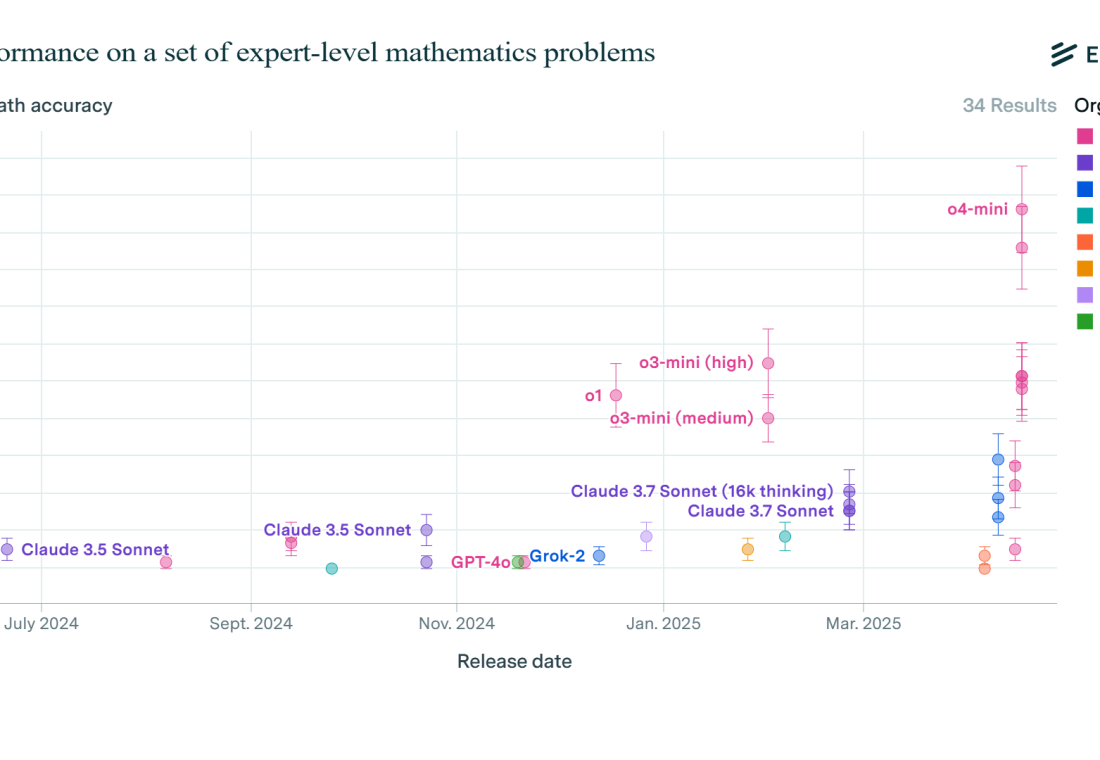
Despite these philosophical and professional concerns, the practical reality of modern mathematical research is inescapable. AI models have proven to be exceptionally useful in navigating the vast and increasingly complex landscape of mathematical data. They can process large datasets, identify non-obvious correlations, and suggest potential avenues for proof that might otherwise remain hidden to human researchers.
This utility creates a paradox. Mathematicians “hate” the AI because it threatens the core identity of their profession, yet they “can’t quit it” because it offers a significant competitive advantage in research productivity. The tools are too effective to ignore. In a field where breakthroughs can be rare and difficult to achieve, the ability to leverage AI to accelerate the discovery process is a powerful incentive. Researchers find themselves dependent on the very technology they view with suspicion, leading to a state of cognitive dissonance.

The Tension Between Identity and Efficiency
This dynamic highlights a broader tension in the scientific community between the preservation of traditional methodologies and the adoption of new, efficient technologies. For mathematicians, the issue is particularly acute because mathematics is often seen as the purest form of human intellectual achievement. The idea that a machine could replicate or surpass this achievement strikes at the heart of professional identity.
However, the pressure to publish, to solve open problems, and to remain at the forefront of the field forces many to compromise. The result is a hybrid approach where AI is used as a powerful assistant, but the final validation and interpretation remain in human hands. This compromise, however, does not fully resolve the underlying anxiety. The fear persists that the line between human and machine contribution will continue to blur, further eroding the distinct value of human mathematical thought.
Implications for the Future of Research
The current situation suggests that the relationship between mathematicians and AI will continue to evolve in complex ways. As AI models become more sophisticated, the utility of these tools will likely increase, making it even harder for researchers to opt out. At the same time, the existential concerns will not disappear. The field may need to redefine what constitutes a mathematical contribution, shifting the focus from the act of discovery to the act of verification, interpretation, and the formulation of new problems.
For now, the community is stuck in a limbo. They are using the tools that they believe are undermining their profession, driven by the undeniable benefits these tools provide. This paradox is not unique to mathematics, but it is particularly pronounced in a field where the product of the work is abstract, intellectual, and deeply tied to human identity. The resolution of this tension will likely shape the future of mathematical research for decades to come.
Conclusion
The story of mathematicians and AI is a tale of conflicting values and practical necessities. It is a reminder that technological advancement does not always align with professional or philosophical comfort. As AI continues to permeate the field, mathematicians will need to navigate this complex landscape, balancing their fear of obsolescence with the pragmatic need to use the most powerful tools available to them. The outcome of this struggle will have significant implications not only for mathematics but for the broader understanding of human intelligence and creativity in the age of artificial intelligence.