
Tech-A.I

Ella Beatty Discusses Her Approach to Portraying Lizzie Borden in Netflix’s ‘Monster’

Foto tomada desde la ventana de un hotel hacia la antena de Televisa
Own work · Wikimedia Commons · CC BY 4.0

Actress Ella Beatty on the Ethical Weight of Playing a Historical Suspect

Netflix’s true crime anthology series Monster has established itself as a significant cultural touchstone for audiences interested in the intersection of factual history and dramatic storytelling. The latest installment, Monster: The Lizzie Borden Story, centers on one of the most enduring mysteries in American history. At the heart of this production is actress Ella Beatty, who has taken on the role of Lizzie Borden, the woman who was tried and acquitted for the 1892 axe murders of her father and stepmother in Fall River, Massachusetts.

In a recent interview with Forbes, Beatty addressed the complexities of portraying a figure who remains a subject of intense public debate. The case of Lizzie Borden has captivated the public imagination for over a century, spawning countless theories, songs, and media adaptations. For an actor stepping into this role, the challenge is not merely technical but ethical, requiring a balance between historical accuracy and human empathy.
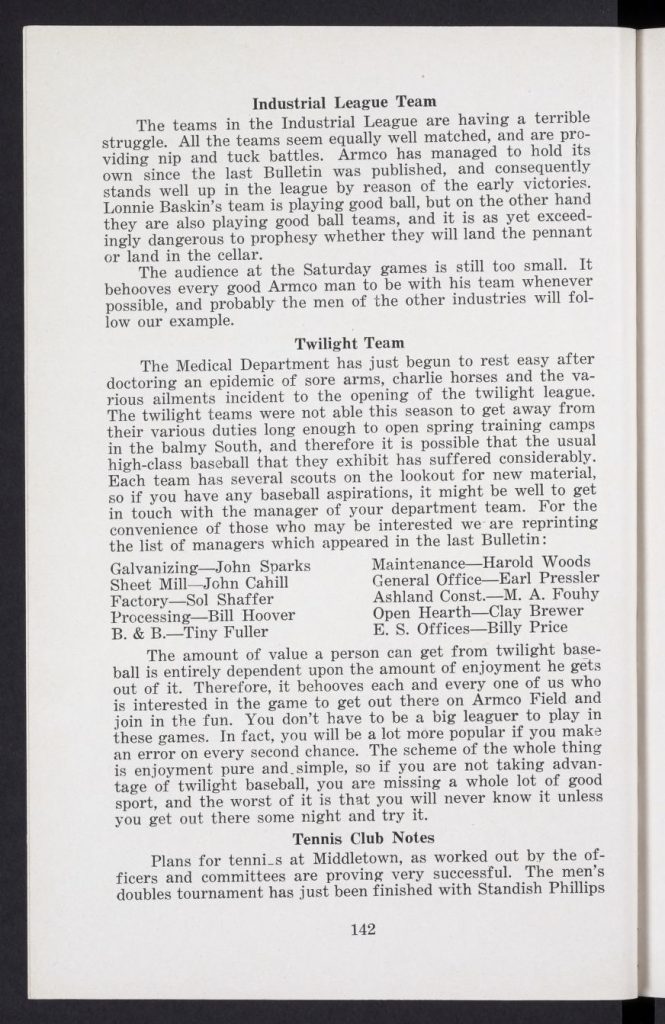
This is the July 1923 issue of the Armco Bulletin, once again a monthly publication "published in the interests of 'ARMCO MEN' under the direction of the Departments of Personal Service." This bulletin is untitled, but the leading article in the issue is titled, "The Medical Department." The front and back covers are missing from the original issue. The pagination in this issue continues where the previous issue ended. A quotation page, and the portrait page, before page 123, and pages 124-125, and 130, are unpaginated, and are included in the page count. Table of Contents Quotation by William I. Schaffer, Justice, Supreme Court of Pennsylvania - Page 121 [unpaginated] Signed Portrait of H. S. Murat, M. D. - Page 122 [unpaginated] The Medical Department, by H. S. Murat, M. D., Chief Surgeon, with illustration, photographs, and captions - Pages 123-132 [Pages 124-125 and 130 are unpaginated] Rededication, by Charles R. Hook, Vice President and General Manager, with illustration - Page 133 The Doctrine of Sweat, from the Saturday Evening Post - Pages 134-135 Twenty-Year Men : Photographs with Biographies - Page 135 Marriages, with photograph and caption - Page 136 Armco Babies, with illustration - Page 137 Deaths, with photograph and illustration - Page 137 Economics for Employees, by A. J. Beatty, Director of Training, with photograph and caption - Page 138 The Foreman a Safety Teacher, by R. G. Adair, Supervisor of Safety - Page 139 Do Tell - Page 140 Middletown : The Armco Sunday Representative Team, Industrial League Team, Twilight Team, and Tennis Club Notes - Pages 141-143 Middletown : The Armco Band - Page 143 Middletown : Another Shower, Interdivisional Track Meet, and Little Words : [A Poem] by Edmund Leamy - Page 144 Zanesville - Page 145 Ashland : Armco Association Organized, General Office, Tennis, and We Are Blind : [A Poem] by Edwin Markham - Pages 146-147 Nellis, W. Va. : Community Building, Baseball, Dancing, Marriages, News Notes, and The Winds of Fate : [A Poem] by Ella Wheeler Wilcox - Pages 148-149 Columbus : The American Rolling Mill Company Cops South Side Industrial Track and Field Meet, with photograph and caption, Summaries, and Human Progress - Pages 150-152
This file was contributed to Wikimedia Commons by Midpointe Library System as part of a cooperation project. The donation was facilitated by the Digital Public Library of America, via its partner Ohio Digital Network. Record in source catalog DPLA identifier: ae774d38c3f2750ec37af93a1506cacc Midpointe Library System identifier: armco_bulletin_192307; Ohio Room REF 669.14209771752 Ame 1923 v.10 · Wikimedia Commons · Public domain

The Actor’s Role as an Advocate

Beatty articulated a specific philosophy regarding her performance, emphasizing the responsibility of the actor to humanize the subject. She stated, “My job as the actress is to love her and be her advocate.” This perspective suggests a deliberate choice to approach the character not as a villain, but as a complex individual navigating a difficult historical moment. By framing her role as advocacy, Beatty highlights the importance of understanding the character’s internal state and motivations, rather than simply replicating the actions that led to her trial.

This approach aligns with broader trends in true crime storytelling, where creators are increasingly focused on the nuances of human behavior and the social contexts that shape individual actions. The series aims to explore the pressures and circumstances surrounding the Borden family, providing a backdrop for the events that unfolded in 1892.

Contextualizing the Historical Mystery

The Lizzie Borden case remains one of the most famous unsolved murders in the United States. On August 4, 1892, Andrew Borden and his wife Abby were found dead in their home, both having suffered multiple axe wounds. Lizzie, their daughter, was the primary suspect due to her proximity to the victims and the circumstances of the crime. However, she was acquitted of both counts of murder in 1893, a verdict that has fueled speculation for generations.
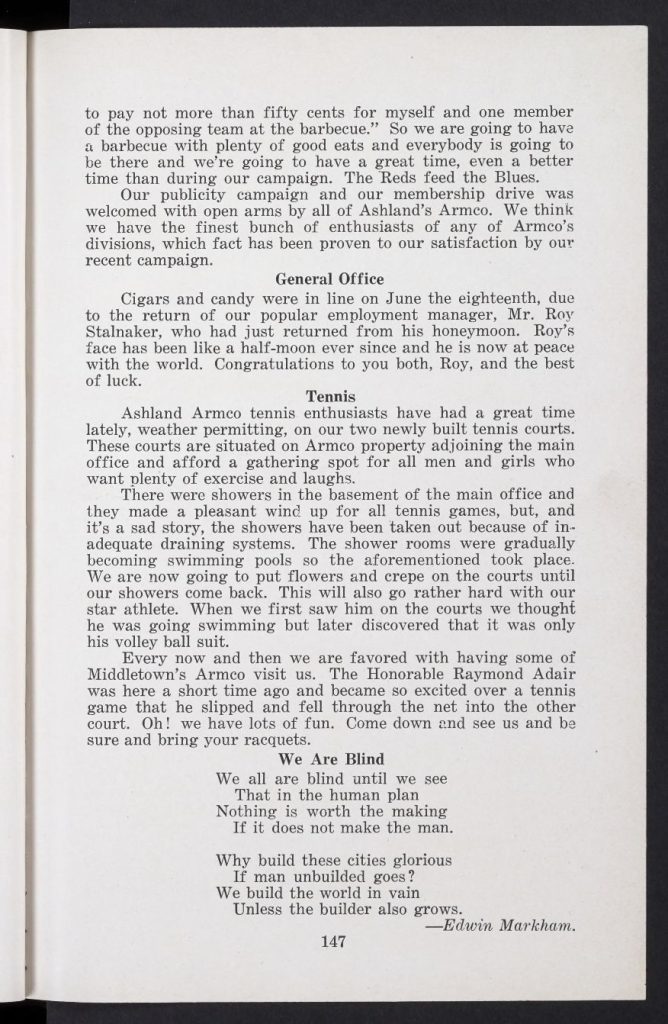
This is the July 1923 issue of the Armco Bulletin, once again a monthly publication "published in the interests of 'ARMCO MEN' under the direction of the Departments of Personal Service." This bulletin is untitled, but the leading article in the issue is titled, "The Medical Department." The front and back covers are missing from the original issue. The pagination in this issue continues where the previous issue ended. A quotation page, and the portrait page, before page 123, and pages 124-125, and 130, are unpaginated, and are included in the page count. Table of Contents Quotation by William I. Schaffer, Justice, Supreme Court of Pennsylvania - Page 121 [unpaginated] Signed Portrait of H. S. Murat, M. D. - Page 122 [unpaginated] The Medical Department, by H. S. Murat, M. D., Chief Surgeon, with illustration, photographs, and captions - Pages 123-132 [Pages 124-125 and 130 are unpaginated] Rededication, by Charles R. Hook, Vice President and General Manager, with illustration - Page 133 The Doctrine of Sweat, from the Saturday Evening Post - Pages 134-135 Twenty-Year Men : Photographs with Biographies - Page 135 Marriages, with photograph and caption - Page 136 Armco Babies, with illustration - Page 137 Deaths, with photograph and illustration - Page 137 Economics for Employees, by A. J. Beatty, Director of Training, with photograph and caption - Page 138 The Foreman a Safety Teacher, by R. G. Adair, Supervisor of Safety - Page 139 Do Tell - Page 140 Middletown : The Armco Sunday Representative Team, Industrial League Team, Twilight Team, and Tennis Club Notes - Pages 141-143 Middletown : The Armco Band - Page 143 Middletown : Another Shower, Interdivisional Track Meet, and Little Words : [A Poem] by Edmund Leamy - Page 144 Zanesville - Page 145 Ashland : Armco Association Organized, General Office, Tennis, and We Are Blind : [A Poem] by Edwin Markham - Pages 146-147 Nellis, W. Va. : Community Building, Baseball, Dancing, Marriages, News Notes, and The Winds of Fate : [A Poem] by Ella Wheeler Wilcox - Pages 148-149 Columbus : The American Rolling Mill Company Cops South Side Industrial Track and Field Meet, with photograph and caption, Summaries, and Human Progress - Pages 150-152
This file was contributed to Wikimedia Commons by Midpointe Library System as part of a cooperation project. The donation was facilitated by the Digital Public Library of America, via its partner Ohio Digital Network. Record in source catalog DPLA identifier: ae774d38c3f2750ec37af93a1506cacc Midpointe Library System identifier: armco_bulletin_192307; Ohio Room REF 669.14209771752 Ame 1923 v.10 · Wikimedia Commons · Public domain

Netflix’s adaptation seeks to delve into these historical details, offering a dramatized account that explores the legal proceedings and the societal attitudes of the time. The series is part of a larger franchise that has previously examined other notorious cases, such as the murders committed by Jeffrey Dahmer and the case of Ted Bundy. Each installment aims to provide a fresh perspective on well-known stories, often focusing on the psychological and emotional dimensions of the events.

Production and Reception

The production of Monster: The Lizzie Borden Story has generated significant anticipation among fans of the genre. The casting of Ella Beatty in the lead role has been a focal point of discussion, with critics and audiences alike eager to see how she interprets the character. Beatty’s comments about her approach to the role suggest a thoughtful and nuanced performance, one that seeks to challenge preconceived notions about Lizzie Borden.

The series is expected to attract a wide audience, given the enduring popularity of the Lizzie Borden story. True crime content continues to be a dominant force in streaming, with viewers drawn to the combination of factual reporting and dramatic storytelling. Netflix’s investment in this genre reflects the platform’s strategy to offer high-quality, original content that appeals to a diverse range of interests.

Analysis: The Ethics of True Crime Portrayal

The decision to cast an actress in the role of a historical suspect raises important questions about the ethics of true crime storytelling. While dramatizations can bring attention to historical events and spark public interest, they also risk oversimplifying complex issues or reinforcing harmful stereotypes. Beatty’s emphasis on advocacy and love for the character suggests a commitment to portraying Lizzie Borden with dignity and respect, even in the face of a controversial history.

This approach may resonate with audiences who are critical of sensationalist portrayals of true crime. By focusing on the human element, the series has the potential to offer a more balanced and thoughtful examination of the case. It also highlights the role of the actor in shaping public perception, reminding viewers that historical figures are often reduced to caricatures in popular culture.

Conclusion

Monster: The Lizzie Borden Story represents a significant entry in the true crime genre, offering a new perspective on one of America’s most famous mysteries. Ella Beatty’s approach to the role, characterized by empathy and advocacy, sets the tone for a production that aims to explore the complexities of the case. As the series unfolds, it will be interesting to see how it balances historical fact with dramatic interpretation, and how it contributes to the ongoing conversation about the Lizzie Borden story.


Sources

Optional audience measurement is off.
About audience measurement

Optional first-party measurement helps us understand reading and newsletter use. It stores a random browser ID that changes each UTC day and anonymous event records for up to 90 days. We do not send email addresses, search terms or page URLs to analytics. Your choice is remembered for 180 days; you can turn it off here. Do Not Track and Global Privacy Control are respected. Newsletter submissions still go to the newsletter provider when you submit its form.