Tech-A.I

157 U.S. Cities Advance Climate Action Despite Federal Rollbacks

MassDOT Secretary and CEO Richard A. Davey joined Lieutenant Governor Tim Murray and other state and local officials in Hatfield to break ground on the first solar array to be built on state highway property. The solar array will be capable of producing 70 kilowatts of electricity, enough to power MassDOT’s District 2 Highway Administration Building in its entirety. “Governor Patrick and I have focused on investing in clean, renewable technology and energy,” said Lieutenant Governor Murray. “Our Administration continues to work across state agencies to advance green initiatives, and this project is a great example of how innovation can lead to costs savings and job creation in the region.” Construction of the array will be complete by October 31, 2012, and will be done at no upfront cost to MassDOT by JF White. Instead of payment, MassDOT will be purchasing the clean power generated from the array, which under optimum environmental conditions, will power MassDOT’s District 2 Highway Division Administration Building. Under MassDOT’s GreenDOT Implementation Plan, the agency has set goals for reduction in the use of fossil fuel based energy, greenhouse gas emissions, and to improve air quality. By the end of July, Massachusetts had more than 129 megawatts of solar power installed - enough electricity to power more than 20,404 homes. When compared with fossil fuel-generated electricity, it represents the equivalent of eliminating greenhouse gas emissions from 13,870 cars per year. As part of the project, the building will have equipment capable of switching between the solar array and the power grid. During clear days, the building will draw power from the solar array. During night hours or overcast days, the building will be powered by Western Massachusetts Electric Company.
Hatfield- Secretary Davey, Lt. Governor Murray, Solar Array Groundbreaking, August 23, 2012 · Wikimedia Commons · Public domain

As the federal government under the Trump administration moves to scale back climate initiatives, a significant number of U.S. municipalities are taking the opposite approach. According to recent reporting, 157 cities are actively implementing local policies to address the climate crisis, even as national support for such measures wanes.

Local Action Amid Federal Retreat

The divergence between federal and local climate strategies has become increasingly pronounced. In June 2026, the Trump administration issued directives to states, restricting their ability to utilize billions of dollars in federal rebates from the Inflation Reduction Act. Specifically, these funds were previously intended to assist homeowners in transitioning from fossil fuel-based appliances to climate-friendly alternatives, such as heat pumps.

The solar array built on MassDOT Highway Division office property in Northampton is activated. Through the work of the Patrick-Murray Administration and the Legislature, clean, renewable energy and technology has been made a top priority. During optimum conditions, the solar array will power up to 30 percent of MassDOT's District 2 building - and has room to grow. This project was built by JF White at no upfront cost to taxpayers. JF White will earn Solar Renewable Energy Credits that accrue as the system generates power. Known as SRECs, the credits are traded like a commodity and are offered as an incentive for the production of solar energy generating facilities.
Northampton, District Highway Office, Solar Array, December 19, 2012 · Wikimedia Commons · Public domain

However, this federal restriction has not halted local efforts. A notable example is the city of Tacoma, Washington, where a heat pump rebate program continues to operate. This initiative is managed jointly by the city and its local power utility, demonstrating that local entities can maintain and even expand climate programs independent of federal funding streams.

The Role of Municipal Leadership

The persistence of these 157 cities highlights a growing trend of municipal leadership in environmental policy. While the federal government takes a “serious step back” from climate action, local leaders are stepping in to fill the void. This shift underscores the importance of local governance in achieving climate goals, particularly when national policies are in flux or regressive.

By implementing their own rebate programs and incentives, cities like Tacoma are ensuring that residents still have access to resources for reducing their carbon footprints. This local autonomy allows communities to tailor their climate strategies to their specific needs and resources, rather than relying solely on federal mandates.
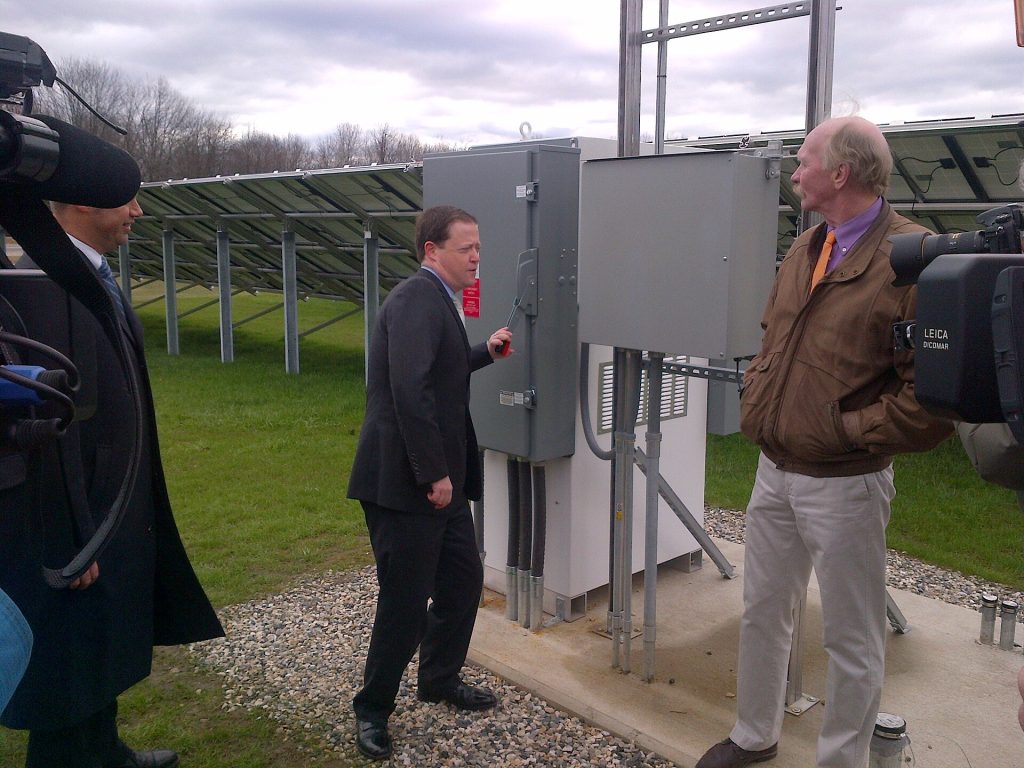
MassDOT Secretary and CEO Richard A. Davey today joined state and local officials to activate the solar array at MassDOT's Highway Division District 2 Administration Building in Northampton. Through the work of the Patrick-Murray Administration and the Legislature, clean, renewable energy and technology has been made a top priority. During optimum conditions, the solar array will power up to 30 percent of MassDOT's District 2 building - and has room to grow. This project was built by JF White at no upfront cost to taxpayers. JF White will earn Solar Renewable Energy Credits that accrue as the system generates power. Known as SRECs, the credits are traded like a commodity and are offered as an incentive for the production of solar energy generating facilities.
Northampton, Secretary Davey, Solar Array, December 19, 2012 · Wikimedia Commons · Public domain

Implications for Climate Policy

The actions of these 157 cities suggest that climate progress in the United States may increasingly depend on local and state-level initiatives. As federal support diminishes, the ability of municipalities to fund and execute their own programs becomes critical. This trend could lead to a more fragmented but potentially more resilient approach to climate action, with different regions adopting strategies that best suit their local contexts.

For homeowners and businesses, the availability of local rebates and incentives remains a key factor in the transition to cleaner energy technologies. The continued operation of programs like the one in Tacoma indicates that despite federal challenges, there are still pathways for individuals to contribute to climate mitigation efforts.

Conclusion

The contrast between federal rollbacks and local advancements in climate action illustrates the complex landscape of environmental policy in the United States. While the Trump administration’s moves may limit federal resources, the commitment of 157 cities to continue their climate initiatives offers a counter-narrative of local resilience and determination. As the nation navigates these policy shifts, the role of local governments in driving climate progress will likely become even more significant.


Sources

Optional audience measurement is off.
About audience measurement

Optional first-party measurement helps us understand reading and newsletter use. It stores a random browser ID that changes each UTC day and anonymous event records for up to 90 days. We do not send email addresses, search terms or page URLs to analytics. Your choice is remembered for 180 days; you can turn it off here. Do Not Track and Global Privacy Control are respected. Newsletter submissions still go to the newsletter provider when you submit its form.