
Luxury travel has spent the past decade perfecting immediacy. Rooms can be booked in seconds, itineraries assembled by algorithm, boarding passes summoned with a tap. On El Hierro, the smallest and least visited of Spain’s Canary Islands, one remarkable retreat has chosen to move in precisely the opposite direction. To stay at El Elevador, there is no “Book Now” button waiting at the bottom of a polished website. The journey begins with paper, ink, and a stamp.
Prospective guests are asked to write a letter by hand explaining what draws them to the property and what they hope to find there. The letter is read individually, and the reply comes through the post: a handwritten preliminary reservation accompanied by a private link through which dates can finally be selected. According to El Elevador, that link is deliberately the only digital moment in the reservation process. Before the Atlantic, the volcanic cliffs or the silence, there is waiting, and that is very much the point.

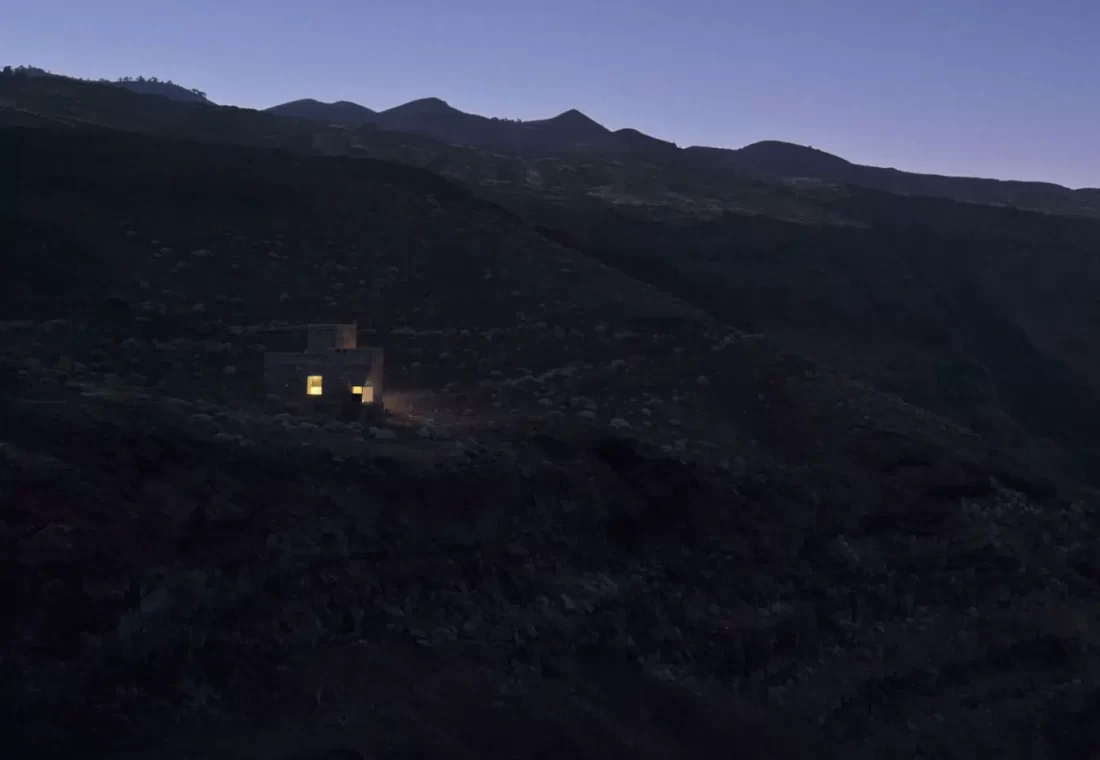
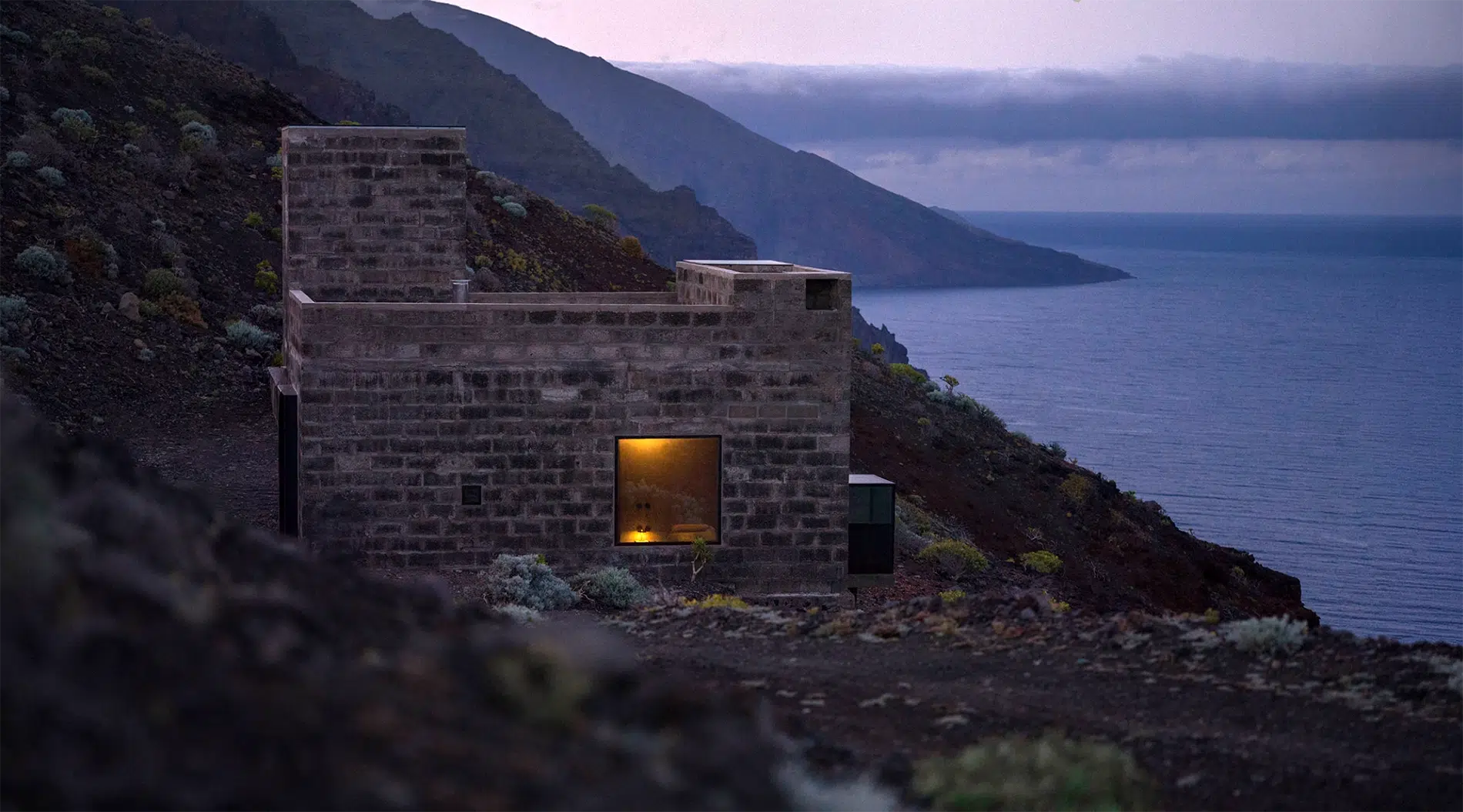
El Elevador stands alone above the sea on El Hierro, perched roughly 250 meters over the Atlantic amid stark lava terrain. The retreat occupies a former 1960s water-pumping station, a utilitarian structure originally connected to an ambitious system designed to lift freshwater from a spring below the cliffs and supply the nearby fishing village of La Restinga. By the time Alberto del Hoyo and Silvia Rodríguez of BeTenerife discovered the building in 2021, it had fallen into ruin. Rather than erase its industrial past, they asked Canarian architect Alejandro Beautell to turn that history into the architecture of the stay itself.
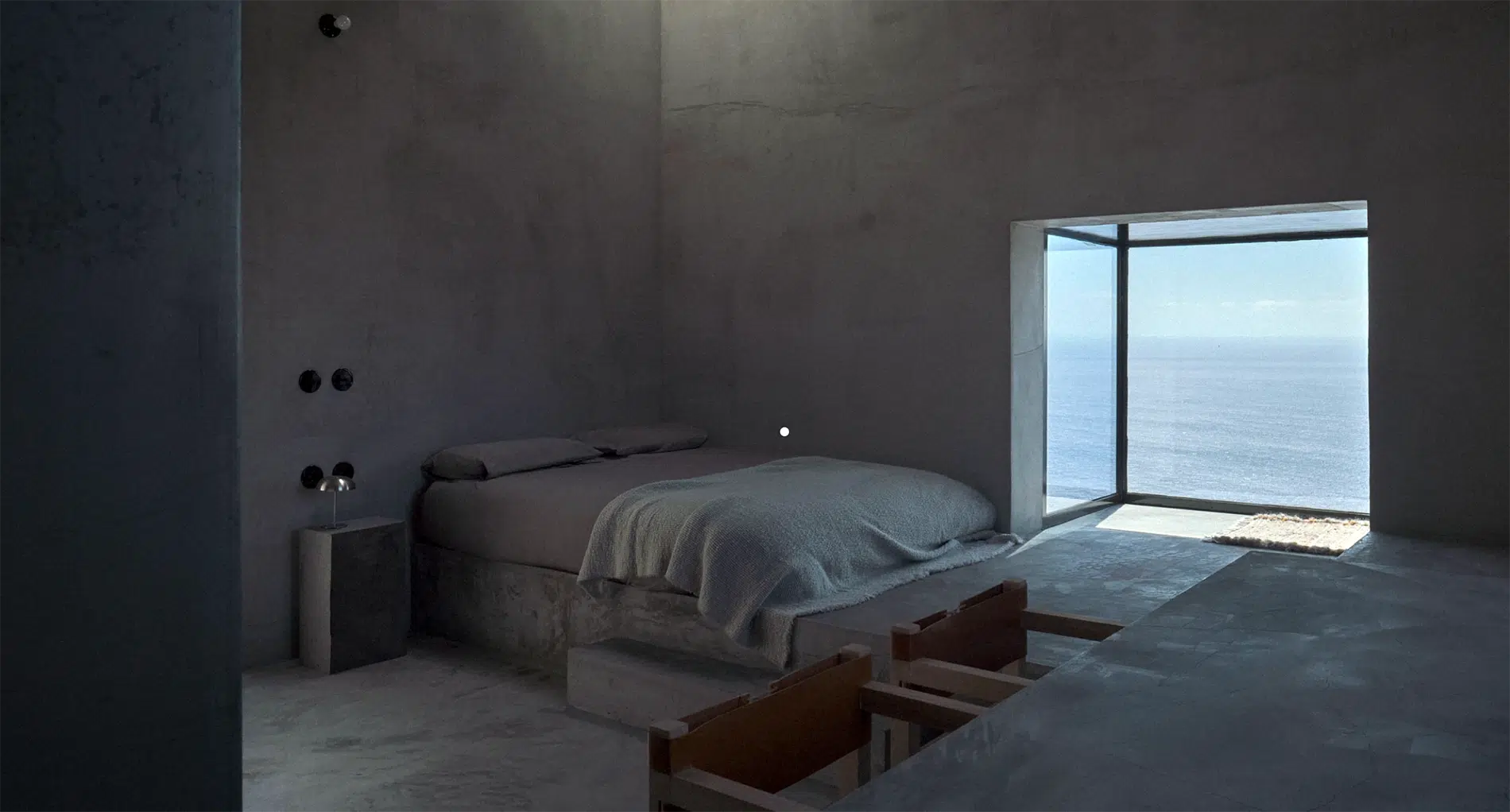
The result is not the kind of luxury hideaway that announces itself through infinity pools, marble bathrooms and acres of decorative softness. From the outside, El Elevador is a small, severe volume of rough concrete that has been compared to a bunker, chapel or remote research station. It sleeps only two. Its visual language is uncompromisingly restrained, allowing the volcanic landscape and vast Atlantic horizon to become the principal decoration.
Beautell’s intervention walks a particularly fine line between austerity and comfort. The architect, known for his work in poured concrete and for religious buildings with a similarly elemental sensibility, preserved the retreat’s industrial character while creating an interior arranged around raw concrete, carefully framed views and the changing quality of island light. The old transformer tower was given new purpose, while openings toward the sea turn the building from an artifact of infrastructure into a place of contemplation.
Yet austerity here does not mean deprivation. The experience has been deliberately edited rather than stripped bare. High-quality linens, cookware and glassware introduce a quiet layer of refinement inside the concrete shell, creating the sort of luxury that is felt through objects chosen well rather than through an excess of them. It is an approach that asks the guest to notice texture, proportion, silence and the passing hours instead of being constantly offered another amenity.
There is no Wi-Fi, television or dependable phone service to soften the experiment. The absence is intentional. El Elevador was conceived around simplicity, solitude and disconnection, with its owners citing ideas associated with stepping outside the modern comfort zone and recovering a more deliberate relationship with one’s surroundings. In practical terms, that means there is very little to interrupt the elemental pleasures available here: reading, sleeping, looking at the ocean and allowing a day to pass without being documented in real time.
That might once have sounded like an inconvenience. Increasingly, it sounds like privilege.
The most compelling luxury experiences have always offered access to something difficult to reproduce elsewhere. Sometimes that means rarity of material, extraordinary service or entry into places unavailable to most travelers. El Elevador proposes another kind of scarcity: uninterrupted attention. In a culture in which virtually every empty moment can be filled by a screen, the retreat turns the absence of connection into the thing being purchased.
Even the handwritten booking process begins conditioning guests for that idea before they arrive. Writing a letter requires more than entering a credit-card number. It forces the prospective visitor to articulate why the journey matters, and it introduces anticipation into a process from which technology has almost entirely removed it. A reservation becomes correspondence; the property begins to occupy the imagination long before a suitcase is packed.
There is also something refreshingly democratic about the ritual. El Elevador’s published reservation process is not framed around gaining access through status or knowing the right concierge. The emphasis is on intention: why do you want to come, and what are you hoping to find? Every handwritten letter is considered, and the process itself becomes a small act of participation in the philosophy of the place.
El Hierro makes an unusually persuasive setting for such an idea. Far removed from the resort density associated with Tenerife or Gran Canaria, the island is the westernmost of the Canaries and remains the archipelago’s least visited. Its landscapes are elemental: volcanic coast, forests, natural pools, agricultural villages and cliffs that seem to descend directly into the Atlantic. Here, remoteness is not a manufactured amenity added to the hotel description; it is the governing condition of the island itself.
That context changes how El Elevador should be understood. It is not a conventional hotel competing on service touchpoints, nor is it particularly interested in becoming one. It is closer to an architectural retreat designed for a highly specific kind of traveler: someone willing to exchange abundance for concentration and entertainment for place.
This is where the project becomes more interesting than its headline-making booking method. A handwritten letter is charming, but charm alone has a short shelf life. What gives El Elevador substance is the coherence between that ritual and everything that follows. The building asks for patience. The architecture asks for attention. The island asks for time. None of those demands feels accidental.
The retreat’s history deepens that sense of purpose. The structure was once part of an effort to overcome El Hierro’s chronic water scarcity by raising freshwater from below the towering southern cliffs. Decades later, a building created to move a precious resource upward has been given another life as a place devoted to stripping life back down. Even its name carries an echo of that history: elevar means “to raise.”
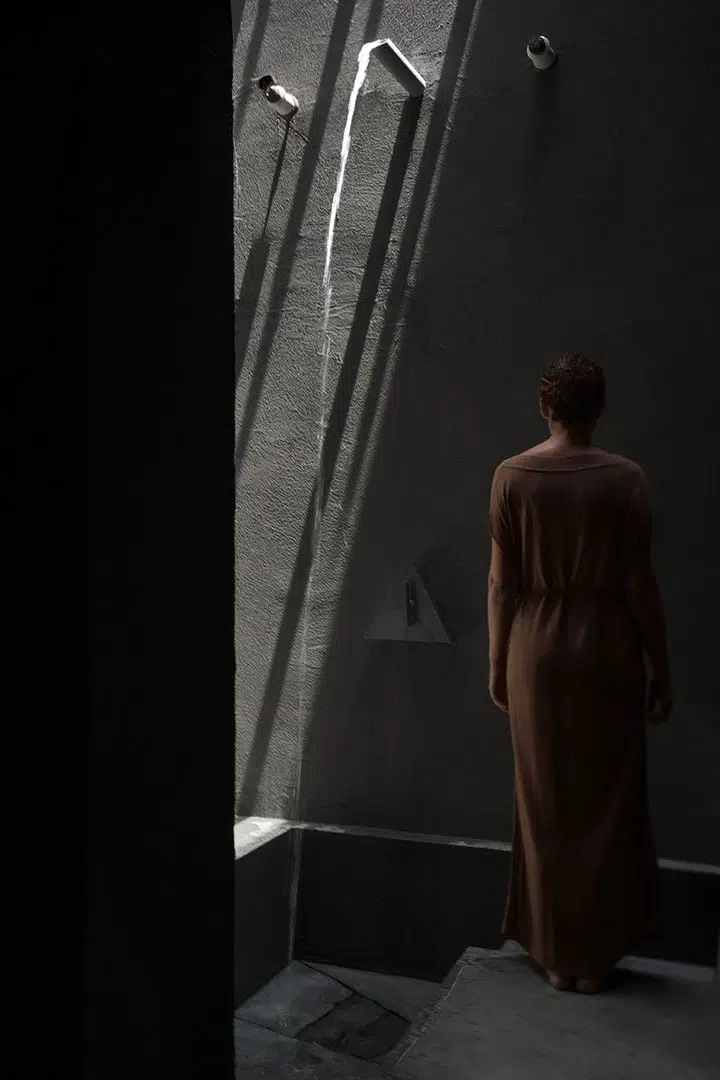
There is considerable sophistication in resisting the temptation to turn that history into theater. El Elevador does not appear to have been polished into nostalgic industrial chic. The architecture remains strong enough to feel slightly challenging, which is precisely what separates the project from the countless “remote retreats” that package rusticity into a highly predictable luxury aesthetic.
Instead, it leaves room for the guest to complete the experience. The Atlantic becomes artwork. Weather becomes atmosphere. Silence becomes programming. The architecture is not trying to entertain its occupants every minute; it is creating the conditions in which they might once again notice where they are.
That may be why El Elevador feels particularly relevant now. Contemporary luxury is undergoing an intriguing correction. For years, convenience was treated as the ultimate expression of service: faster arrivals, frictionless reservations, constant connectivity and every preference anticipated before it could be voiced. Those things remain valuable, but a different appetite is emerging alongside them, for privacy, fewer interruptions, deeper immersion and experiences that cannot be consumed at the same speed as everything else.
El Elevador takes that instinct to its logical extreme. It introduces friction before the guest has even secured a date, and then removes many of the digital conveniences that normally define a modern stay. The paradox is that doing less requires extraordinary confidence. A property must trust its setting, architecture and point of view enough not to fill every silence.
Perhaps that is the new distinction. Luxury does not always need to make life faster, easier or more abundant. Sometimes it can create the opposite: a reason to wait, a place with almost nothing demanding your attention, and enough time to remember what you were hoping to find there in the first place.
At El Elevador, that journey begins before you ever see the volcanic cliffs of El Hierro. It begins at a desk, with a blank sheet of paper and the increasingly unfamiliar act of writing down why you want to go.