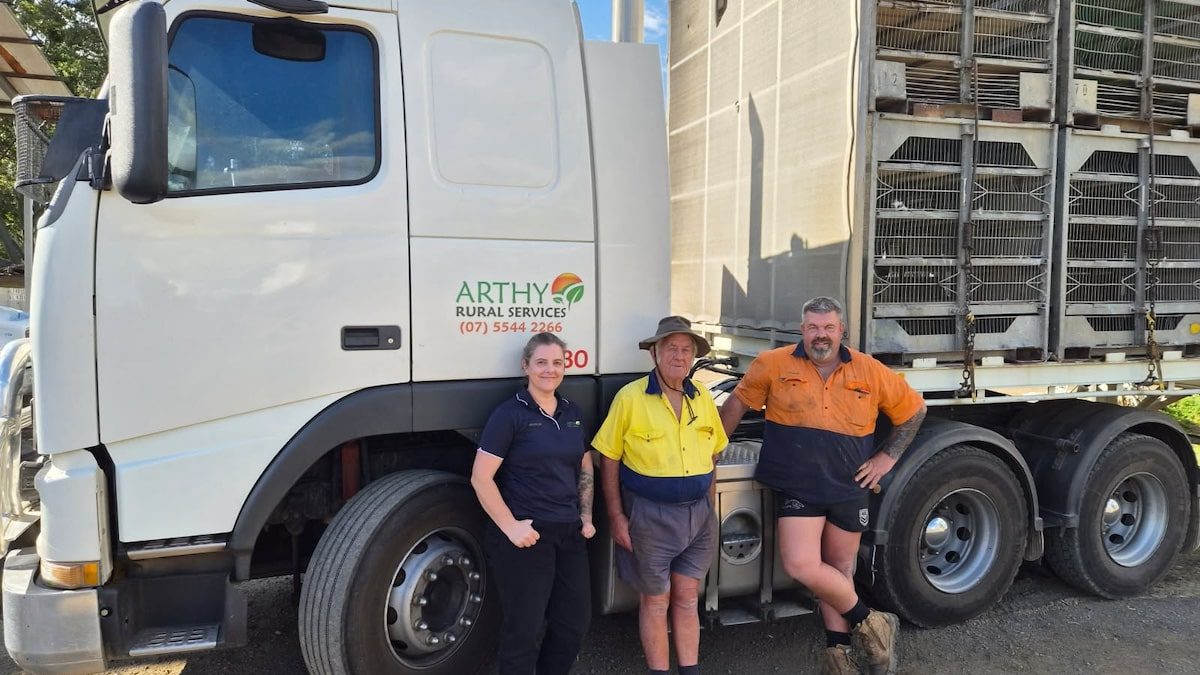
[L-R]: Two generations, Marion, Raymond and Stuart Arthy. Image: Arthy Rural Services
Stuart Arthy was just a baby when his father Raymond Arthy purchased his first truck back in 1972 – marking the start of Arthy Rural Services, which continues to operate from its original site at Laravale, Queensland, to this day.
“Dad bought a blue Austin and red Commer – I don’t remember which he got first, but I do remember riding in the Austin,” said Stuart, now 53.
“By the time I was 13 or 14, I’d go out with him in his crane truck. There were a lot of sawmills in the hills around here so he’d cart the timber waste that would be burned to make charcoal, which is how they’d cook the chickens back in the day.”
Now 81, Raymond’s foray into trucking began when he started driving a local concrete truck at the age of 20. He later borrowed the family’s farm truck, a 4-tonne Bedford, to haul molasses for local dairies, and then bought his own truck as demand for his services grew. Together with his wife Kirtsey Arthy, they launched Arthy Rural Services.
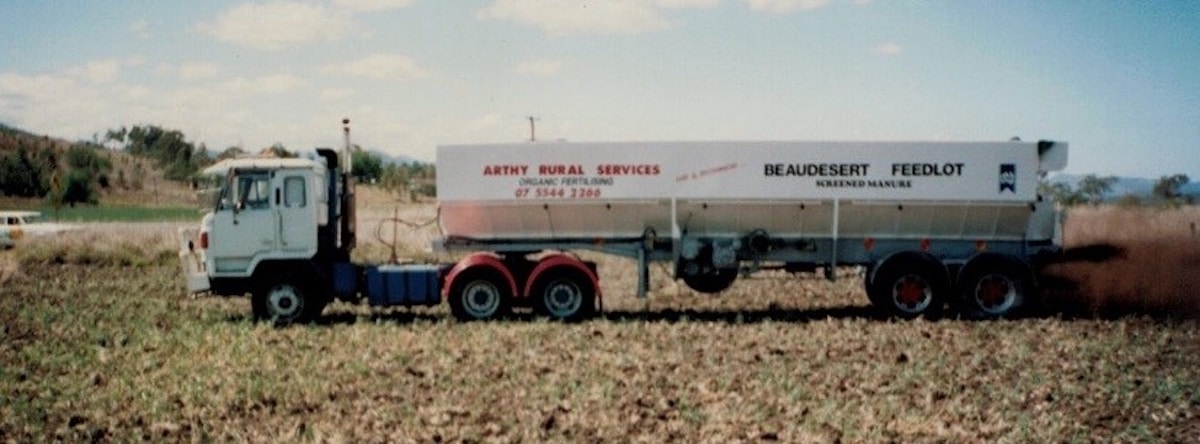
“Dad was the first commercial haulier to cart molasses out of Sunshine Sugar Mills on the north coast of NSW,” added Stuart.
Though molasses transport remains a large part of their offering, Arthy Rural Services has diversified and expanded its services to cater to the needs of the agricultural sector.
In the early days, they carted whey, liquid feed and silage; eventually expanding into carting chicken and feedlot manure; with live chickens added into the mix about 20 years ago.
Having grown up around his parents’ business, it was perhaps not all that surprising that Stuart would eventually join their side. “I came on board as a driver when I was 24 but I did my trade before that as a mechanic, and spent a couple of years working as a race car mechanic before joining the family business,” Stuart explained.
“Dad ran the workshop and I’d help out when I wasn’t driving. Once he retired, I had to step into the workshop role more, but I still get in the truck when I need to.
“We do a lot of our own run of the mill maintenance, but for the bigger stuff we outsource it.”
While Stuart manages the workshop and often jumps in the truck, his sister Marion Sawyers manages the administration side, including fleet allocation. Their younger brother David also works in the business as a mechanic and truck driver.
Marion, 46, also has fond memories of getting involved with the trucks early on as a kid. “I remember I’d help Dad fill drums of molasses on Saturday mornings when I was about 5 or 6,” she said.
“He’d also take me on trips to Bundaberg with the tankers. We’d be away for four or five days at a time and I’d have to sleep in the passenger footwell of the truck, because it didn’t have a bunk.”
It was about 20 years ago that Marion came on board with the family business, after returning from two and a half years of living abroad. “When I came back home, I was at a crossroads with what to do. With Mum and Dad beginning to look towards retirement, Stuart and I formed our own company and started the process of buying them out. When a truck or piece of equipment needed replacing, Stuart and I would buy the new item, and Mum and Dad would get the trade for the old.”
Raymond semi-retired about 10 years ago, and officially retired five years ago, with the siblings taking the reins of the family operation. As Marion told Big Rigs, they still always include their father when making the big business decisions.
“There are always going to be things you do differently from your parents but we really value Dad’s input – he did this for a long time, so he’s got so much knowledge and experience.”
Raymond’s contribution to the transport industry and local community saw him formally recognised in 2021, when he was inducted into the National Road Transport Hall of Fame.
Marion added that their dedicated team of staff helps to keep the business running smoothly. “Our employees are by far our greatest asset, and we really do see each and every one of them as family. They’ve all been here for a very long time, some for well over 20 years, and go above and beyond every day.”
Though recently, the team experienced a tragedy, sadly losing one of their own.
“We went through our worst nightmare earlier in the year with one of our drivers killed in a truck accident, just minutes from our depot,” revealed Marion. “Matt had been with us for over 11 years and it was an absolutely devastating time for us all and we miss him every day.”
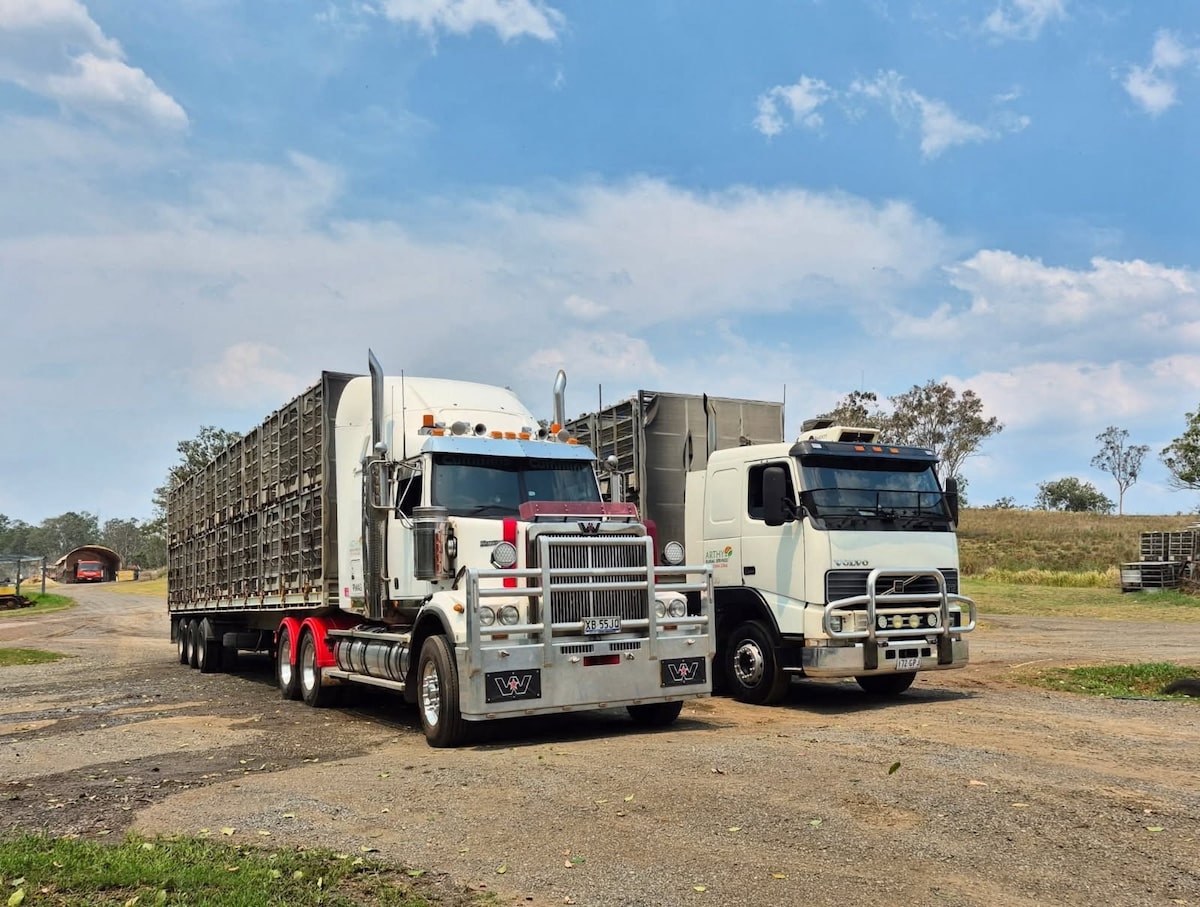
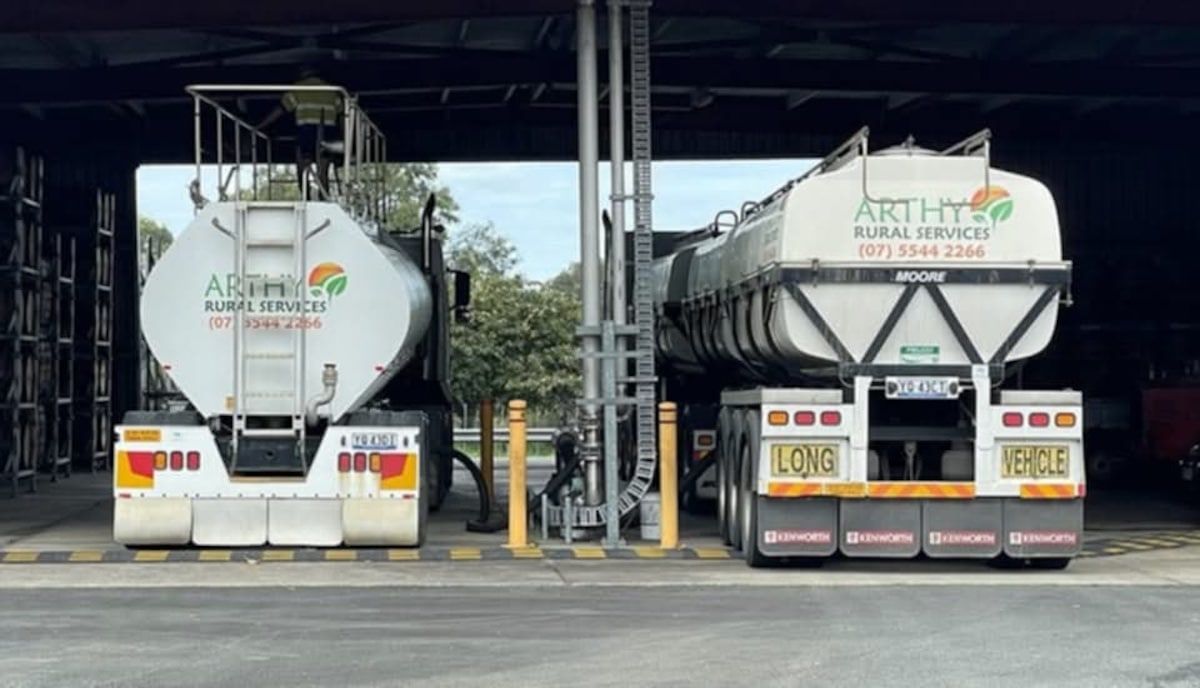
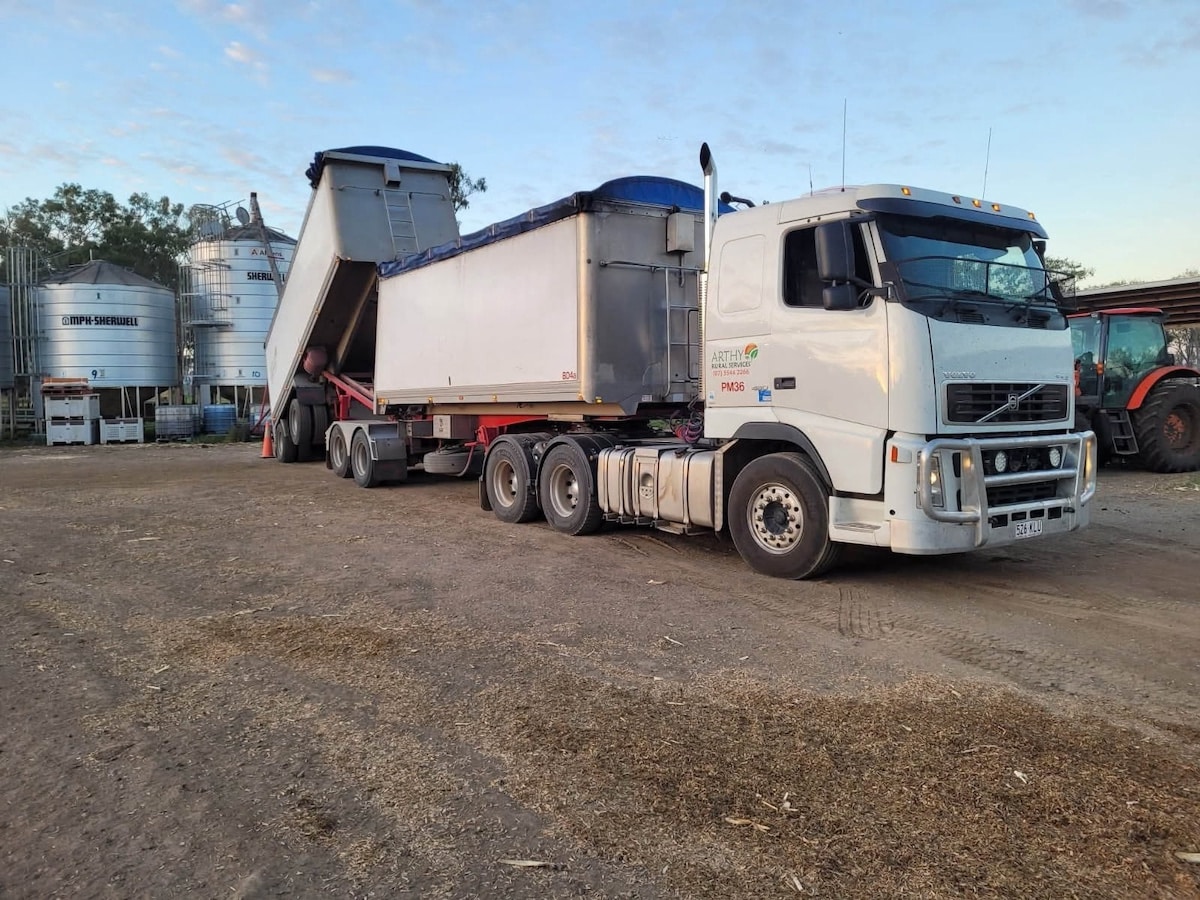
Arthy Rural Services currently runs a fleet of seven trucks, including Volvos, Kenworths, a Mack and a Western Star, and a diverse fleet of 12 trailers.
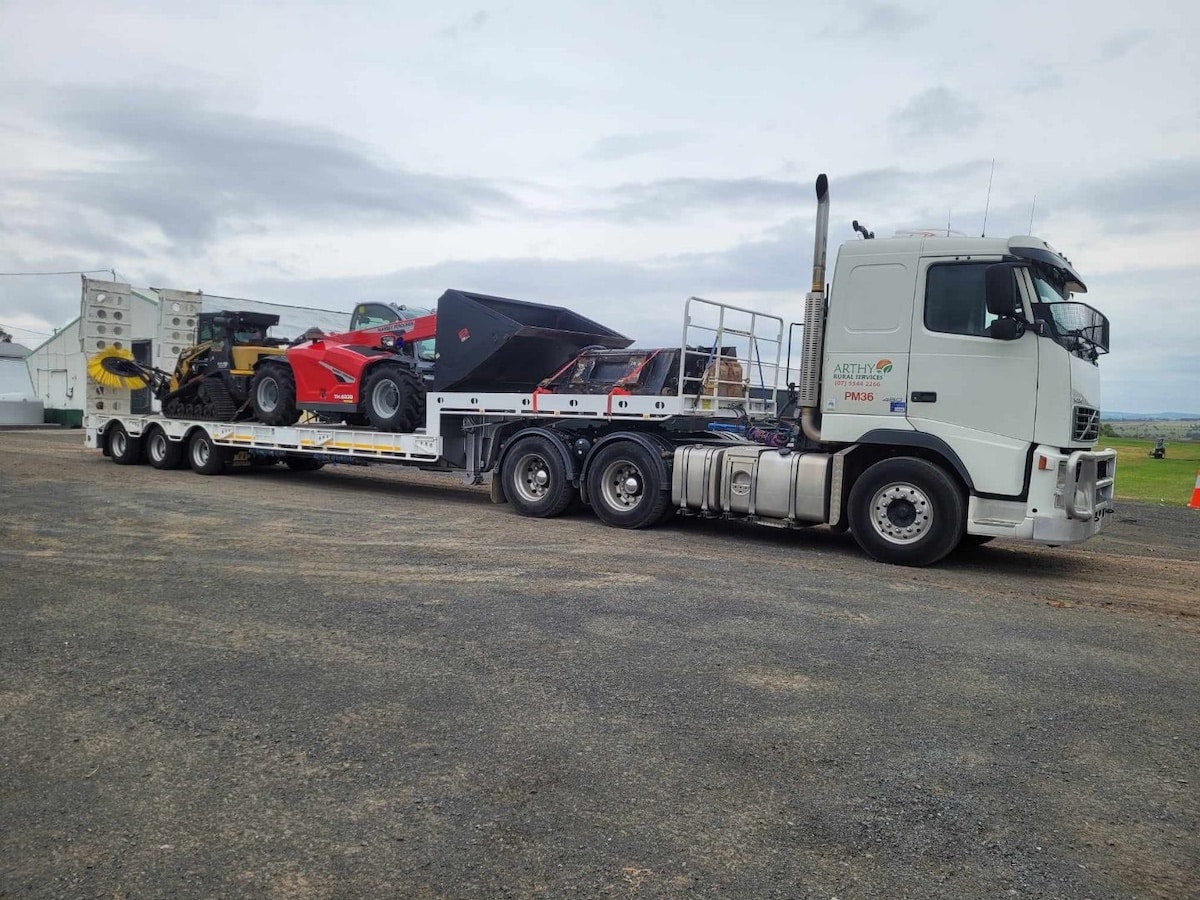
There are three B-double tanker sets for molasses and liquid feed, two specialised trailers used to transport crates of live chickens, a walking floor for chicken manure, a 19-metre B-double set of tippers for bulk grain and fertiliser transport, a rigid truck for gravel and smaller chicken manure deliveries, a drop deck float, and the posi-track and telehandler loaders used for chicken farm cleanouts.
“We do a variety of stuff now. The bulk of the work is about a 50/50 split between molasses and liquid feed for a handful of companies, and the rest of the work is on the chicken side – cleaning out chook farms and refurbishing the shed floors, and transporting chickens,” said Stuart, fresh off delivering a load of chickens.
“I jump in the truck whenever we get really busy. Twice a year we do the big Sydney bird shift from Casino to Bargo in New South Wales. It goes for nearly three weeks each time and it’s two truckloads of chickens a day – with up to 5000 chickens in a load,” he said.
“They rear the chickens at a few farms in Casino and we cart them to Bargo where they spend the next six months making fertile eggs for the broiler industry.”
When Stuart jumps in the truck it’s usually the 2002 Volvo FH12 460, which he’s driven since it was brand new. “That’s my favourite truck,” he said. “Originally I drove it for five years non-stop, then it got passed on to one of our drivers. It’s done over 2.2 million kilometres, but I love it. It still has the original engine and still goes really well.”
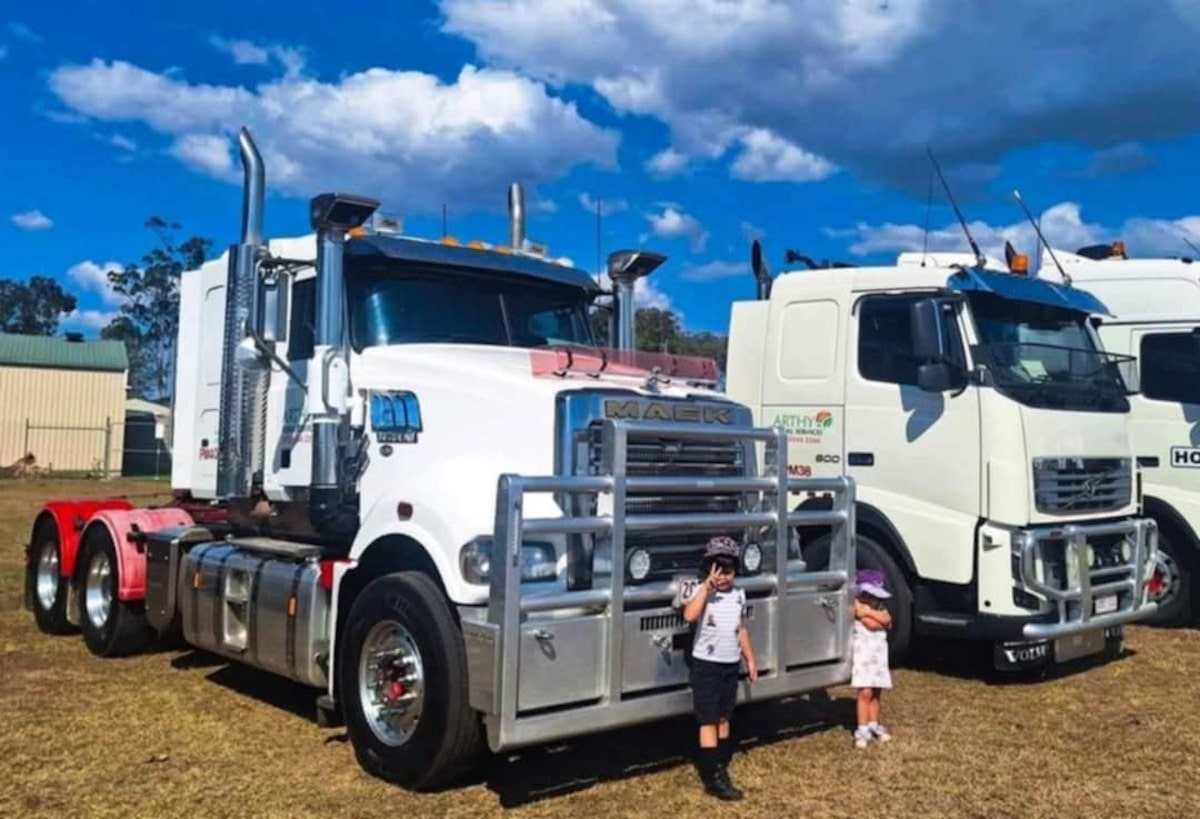
The Arthy branded trucks can typically be found operating throughout Queensland and northern New South Wales, however sometimes they’ll head as far as Victoria and South Australia, if required.
Stuart enjoys being able to get out on the road but admits it can be a juggle. “I do like the driving but when I’m away, I’m always thinking about all the mechanical stuff I have to do when I get back. It was easier for me to manage when we had less trucks and Dad did a lot of the maintenance,” he said.
“But it is pretty cool to be able to continue the family business, especially when you can tell people it’s been around since the 1970s. I guess we’ve really just grown into this.
“Dad always said to us if we ever wanted to get out or sell up, don’t think you owe it to me to keep going – so I think there is a sense of pride for him that we’ve chosen to continue on.”
Sometimes that sort of longevity can bring added pressure too. “It is very rewarding and I’m proud of what we do,” Marion added. “But it’s also very stressful sometimes because you’re so invested in making sure the business is successful. You always want to do a good job to continue the legacy of your parents.
“I love being in business with my family. We’ve hardly ever had any conflicts. We get along very well and we’re very much on the same page when it comes to decision making abilities,” she said.