
The Bridge Between Raw Text and Machine Learning
In the field of artificial intelligence and natural language processing, a fundamental challenge remains: how do we translate human language, which is inherently unstructured and semantic, into a format that computers can process mathematically? The journey from raw words to numerical vectors is not a single leap but a complex process involving several intermediate steps. A recent exploration on Towards Data Science highlights this transition, focusing specifically on the role of Term Frequency-Inverse Document Frequency (TF-IDF) and the concept of vector space in text classification.
The Necessity of Vectorization
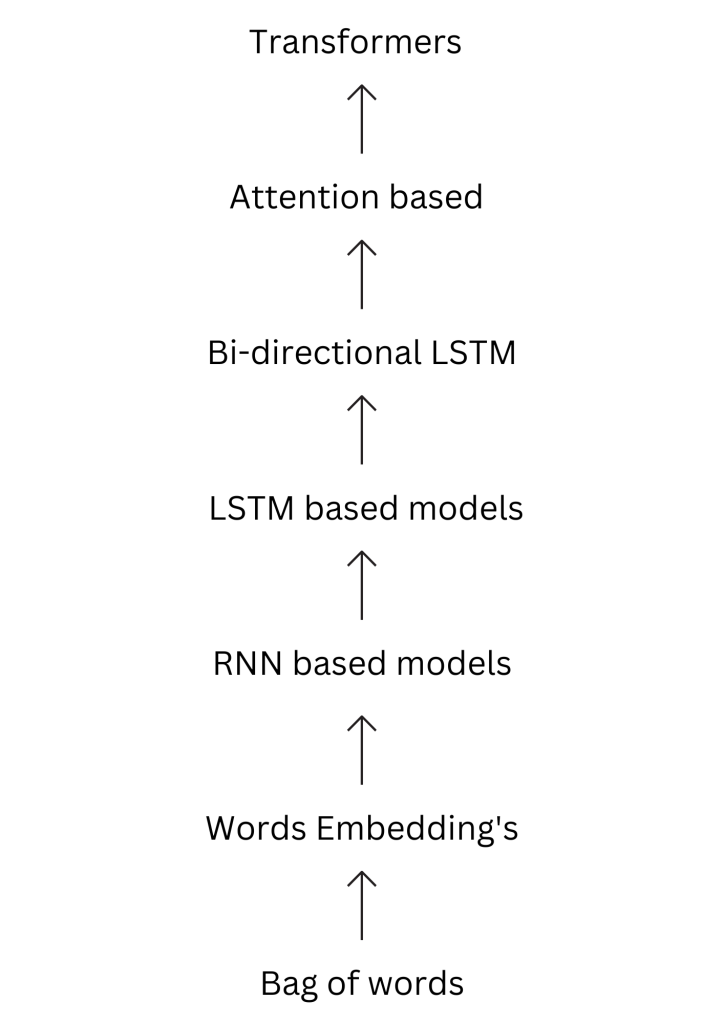
Computers do not understand words; they understand numbers. Therefore, before any machine learning model can analyze text, that text must be converted into a numerical representation. This process is known as vectorization. While modern deep learning models often use embeddings that capture semantic meaning, traditional and still widely used methods rely on statistical representations of word occurrence. The article in question traces this specific path, emphasizing that understanding what happens “in between” the raw text and the final vector is crucial for building effective text classification systems.
TF-IDF: Weighting Words by Importance
At the heart of this intermediate process is TF-IDF, a statistical measure used to evaluate how important a word is to a document in a collection or corpus. The method combines two key components:

- Term Frequency (TF): This measures how often a word appears in a specific document. A word that appears frequently in a document is likely to be relevant to that document’s topic.
- Inverse Document Frequency (IDF): This measures how rare a word is across the entire corpus. Words that appear in many documents (like “the” or “is”) are considered less informative and are down-weighted, while words that appear in few documents are up-weighted.
By multiplying these two values, TF-IDF produces a score that reflects the relative importance of a word to a document within the context of the whole dataset. This scoring mechanism is a critical step in transforming raw text into a structured format that highlights significant terms while filtering out common noise.
Vector Space and Text Classification
Once TF-IDF scores are calculated for each word in a document, the document can be represented as a vector in a high-dimensional space. Each dimension in this vector space corresponds to a unique word in the vocabulary of the corpus. The value of each dimension is the TF-IDF score for that word in the document.
This vector space representation allows for mathematical operations that are essential for text classification. For instance, the similarity between two documents can be calculated by measuring the distance or angle between their respective vectors. Classification algorithms can then use these vectors to learn patterns and categorize new, unseen documents based on their proximity to known categories in the vector space.
Why the Intermediate Steps Matter
The focus on “what happens in between” underscores the importance of feature engineering in machine learning. While end-to-end neural networks have gained popularity, understanding the underlying mechanics of how text is represented remains vital for several reasons:
- Interpretability: TF-IDF vectors are easier to interpret than dense embeddings. One can see exactly which words contributed to a classification decision.
- Efficiency: For smaller datasets or specific tasks, TF-IDF-based methods can be faster and more efficient than training large neural networks.
- Foundation: Many advanced techniques build upon or compare against these foundational methods. Understanding the baseline helps in evaluating the performance of more complex models.
Practical Implications for Data Scientists
For practitioners in data science, the journey from words to vectors is a practical exercise in data preprocessing. The choice of vectorization method can significantly impact the performance of downstream classification tasks. By carefully considering how to weight terms and represent documents in vector space, data scientists can improve the accuracy and robustness of their text analysis pipelines.
Conclusion
The transition from raw text to numerical vectors is a cornerstone of natural language processing. While the field continues to evolve with new architectures and techniques, the principles underlying methods like TF-IDF and vector space representation remain relevant. By examining the intermediate steps in this process, we gain a deeper understanding of how machines interpret language and how we can guide that interpretation to achieve better results in text classification and other NLP tasks.