
The landscape of artificial intelligence is undergoing a significant conceptual shift. While the majority of public attention has been directed toward large language models (LLMs) that excel at generating text, a new category of AI is emerging that prioritizes decision-making over content creation. This emerging field is centered around a concept known as Jev.
Defining the Jev Paradigm
According to recent analysis published on Towards Data Science, Jev represents a distinct approach to artificial intelligence. Unlike traditional generative models that are trained to predict the next token in a sequence of text, Jev is characterized by its ability to make decisions. This distinction is fundamental to understanding the future trajectory of AI applications.
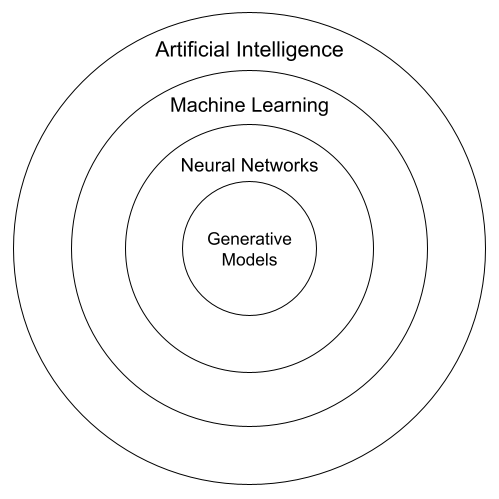
The core premise of this new paradigm is that the primary value of AI in many enterprise and operational contexts lies not in the production of human-readable text, but in the execution of logical, data-driven choices. While text generation is a visible and often celebrated capability, decision-making is the underlying mechanism that drives automation, optimization, and strategic execution.

Text Generation vs. Decision Making
To understand the significance of Jev, it is necessary to contrast it with the dominant generative AI models that have captured the public imagination. Generative AI is typically evaluated based on its fluency, creativity, and ability to mimic human writing styles. In contrast, the Jev framework evaluates AI based on its accuracy, reliability, and capacity to select the optimal course of action from a set of possibilities.
- Generative AI: Focuses on outputting text, images, or code. The goal is to create new content that resembles human creation.
- Jev (Decision-Making AI): Focuses on inputting data and outputting a specific decision or action. The goal is to optimize outcomes based on defined criteria.
This shift suggests a move away from AI as a creative tool and toward AI as an operational engine. In this model, the AI does not need to explain its reasoning in natural language; it simply needs to execute the correct decision efficiently.

Implications for AI Development
The introduction of Jev as a distinct category highlights a potential limitation in the current focus on large language models. While LLMs are powerful, they are often overkill for tasks that require precise, deterministic decision-making. By focusing on decision-making, developers can create more specialized, efficient, and reliable AI systems tailored to specific business processes.
This approach may lead to a more fragmented but highly effective AI ecosystem, where different models are deployed for different purposes. Some models will continue to handle creative and communicative tasks, while others, aligned with the Jev philosophy, will handle the critical operational decisions that drive business value.
The Role of Data Science
The discussion of Jev appears prominently in data science communities, indicating that this is a technical and practical concern for practitioners. Data scientists are increasingly recognizing that the success of AI projects is not measured by the quality of the text generated, but by the impact of the decisions made. This aligns with the traditional goals of data science: to extract insights and drive action.
By framing AI in terms of decision-making, the Jev concept bridges the gap between traditional machine learning and modern deep learning. It emphasizes the utility of AI in solving real-world problems, rather than just demonstrating technical prowess in language modeling.
Conclusion
The emergence of Jev signals a maturation of the AI field. As the novelty of text generation fades, the focus will shift to the practical applications of AI in decision-making. This shift is likely to have profound implications for how businesses adopt AI, moving from experimental chatbots to integrated decision-support systems. Understanding the distinction between generative and decision-making AI is crucial for anyone involved in the development or deployment of these technologies.