

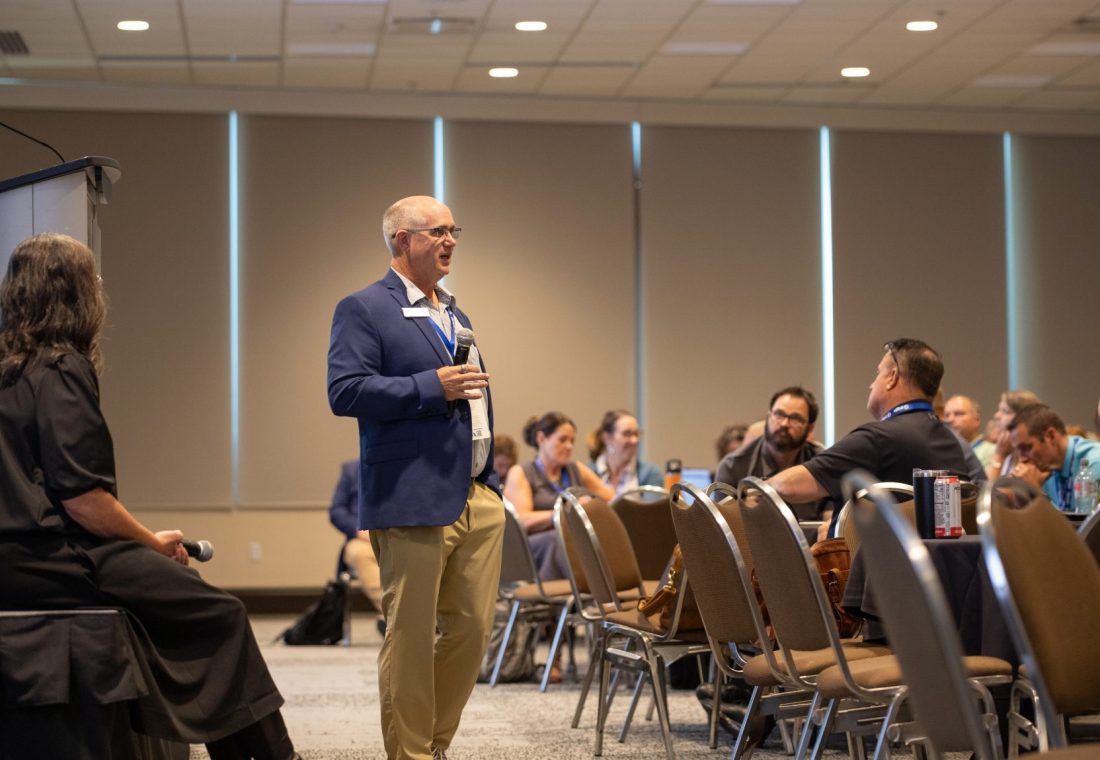
Lt. Gov. Scott Bedke told a room of superintendents on Monday to beware of a technique that some lawmakers have mastered: the “legislative head bob.”
Legislators have healthy egos, Bedke explained, and they don’t want to appear ignorant on any issue. They will nod along as a local expert explains the impacts of a new bill, throwing in an occasional “uh huh” or a “good point.”
Bedke then gave the hundreds of school leaders gathered in downtown Boise at the Idaho School Administrators Association summer leadership conference a call to action.
“Our goal is to break through that so that we can have real conversations,” Bedke said.
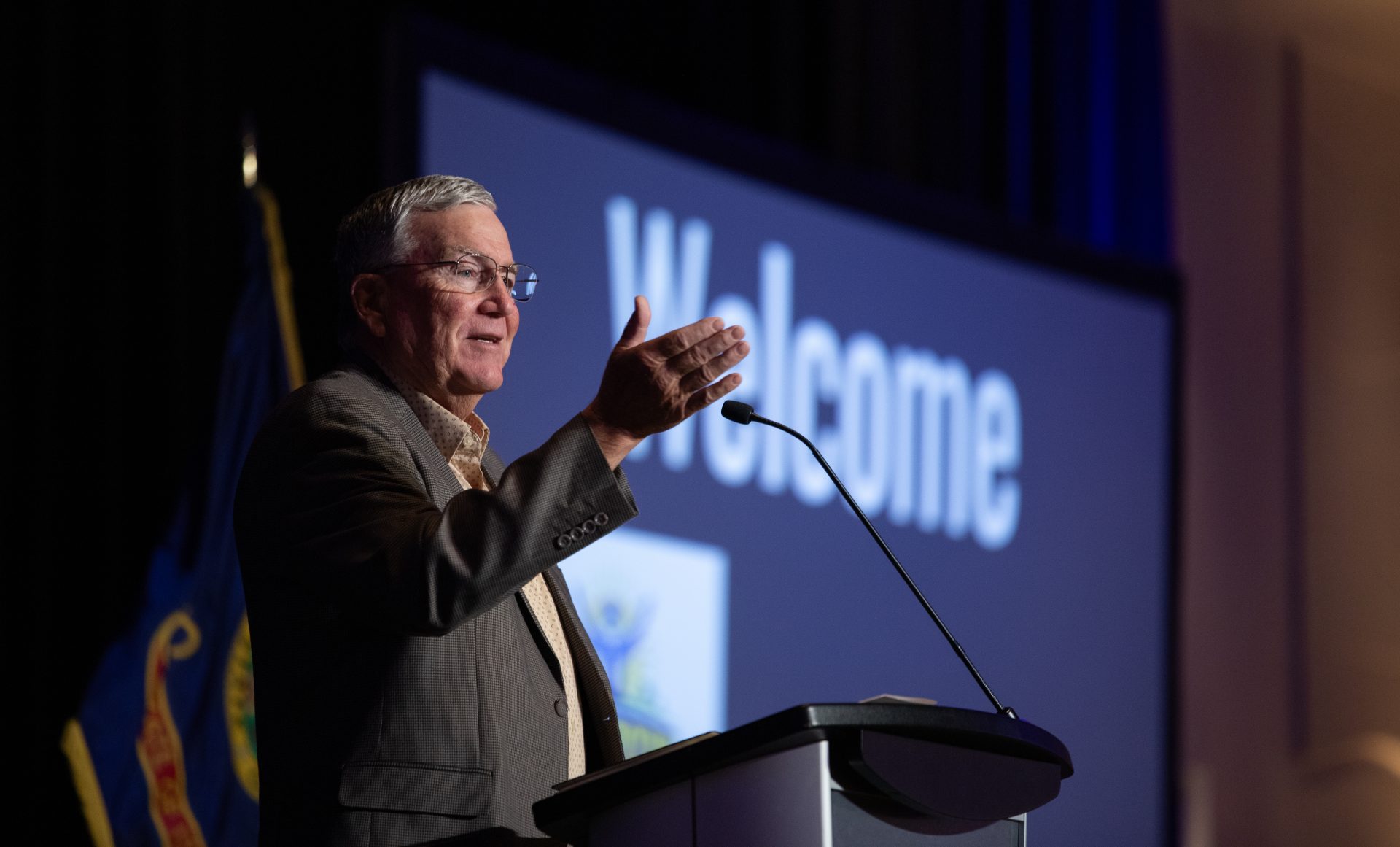
The message came during an annual conference where superintendents, principals, special education directors and other administrators gather to recharge, build leadership skills and solve statewide problems.
“This is an event where they can build those relationships and hopefully call on each other throughout the year,” IASA Associate Executive Director Heather Williams told EdNews.
Williams and IASA Executive Director Andy Grover continued the theme of building relationships with lawmakers during an afternoon session, recapping the 2026 session and looking ahead to 2027.
By building those relationships, Grover said administrators may find themselves receiving text messages from lawmakers from the House or Senate floor, asking how a bill could impact the local school districts.
“That’s what we need,” Grover said. “We need to have those voices.”
Reflecting on 2026
This year was not a great session for public education, Grover told attendees. It’s an election year, which typically means fewer bills. But this year bucked that trend.
“They ran more bills (in 2026) than they’ve ever run in the past, and you can bet that the majority of them were not good, and they’re not in favor of public education,” he said.
Grover said the Legislature has not increased flexible, discretionary funding for school operations in the past two years and is unlikely to do so this year. Meanwhile, inflation has increased costs for everyone.
“In just over the last three years, inflation is anywhere from about 35% to 42% depending on where you live in Idaho,” Grover said. “Well, you’ve got no new money for that for going on three years now.”
As enrollment declines in many districts around Idaho, he said some lawmakers mistakenly believe that if a district loses 30 students they can fire a teacher and be fine. But he said that’s not how it works. There is a cost just to do business, whether there are five students or 500.
“As you talk to your local legislators, it would help us all if you really help them understand fixed costs, if nothing else,” Williams said.
On social issues, Grover said principals this year pushed back on the moment of silence bill, which requires public schools to provide time each day for students to observe a moment of silence. But he said that bill was a compromise to avoid other proposals, including requiring Bible reading, displaying the Ten Commandments or allowing clergy in schools.
“Yeah, it sucks, but I’ll tell you what,” Grover said. “It’s a lot better than the other four bills that we killed the year before.”
Williams and Grover gave the superintendents a list of eight questions to ask legislators as they consider bills:
- What problem is this solving?
- How will success be measured?
- Will it improve student outcomes?
- Can schools realistically implement it?
- Is it sustainably funded?
- Will it work in communities of every size?
- What unintended consequence could it create?
- Has district modeling been completed?
Full-day kindergarten: A possible ‘conversation piece’ for next session
Before Bedke took the stage at the Boise Centre on Monday morning, Gov. Brad Little spoke about potential legislation for next year.
But Little started with a caution: The state does not have a $250 million surplus, as some have claimed. The $250 million is one-time money, not ongoing revenue. He said he is urging legislators and agency directors to take a “tone of caution” as they prepare budget requests.
Little touted the state’s investment in literacy funding — an increase of $78 million annually since he took office — but recognized that many districts use the funding to pay for kindergarten. The state funding formula only covers half-day kindergarten. If the state were to fund full-day kindergarten, Little said it could cost between $50 million and $70 million.
“When you do something like that, that means something else is going to fall off the edge,” Little said.
Twin Falls Superintendent Brady Dickinson pushed on that point during the afternoon session with Williams and Grover.
“Well then what’s the other drop off?” Dickinson said. “Because if you do that, we’re no better off. We’re already funding all-day kindergarten through literacy funds.”

Grover said he has met with the Governor’s Office in recent weeks to talk about the possibility of funding all-day kindergarten — which he said would cost $76 million — and his first reaction was that the state would just take money from literacy to pay for it.
“That’s exactly what we don’t want to happen,” Grover said.
If full-day kindergarten becomes the “conversation piece,” Grover said he will ask superintendents to help push it through.
Another possible area that the Legislature could address is school district consolidation, Grover said.
“Now what they’re talking about is having some incentives if districts will help consolidate some of their smaller schools,” he said. “So there’s a bunch of people talking about this.”
From IASA’s perspective, Grover said there is generally no savings when districts consolidate. Costs could actually go up. But he favors consolidating services, such as IT directors or business managers.
“I don’t know where that conversation is going to go, but just be aware that that is a huge conversation that’s happening at the state level,” he said.
The conference continues Tuesday with more sessions, including a candidate forum for state superintendent of public instruction at 10 a.m.