Americans have given up on saving.
Ongoing financial pressure is making it harder for Americans to save, according to The Penny Hoarder’s 2026 State of Savings survey. When compared to the State of Savings survey conducted in 2025, more Americans lack a basic financial cushion.
Save more. Stress less. Sign up for The Penny Hoarder’s free newsletter today.
What Changed Since Last Year
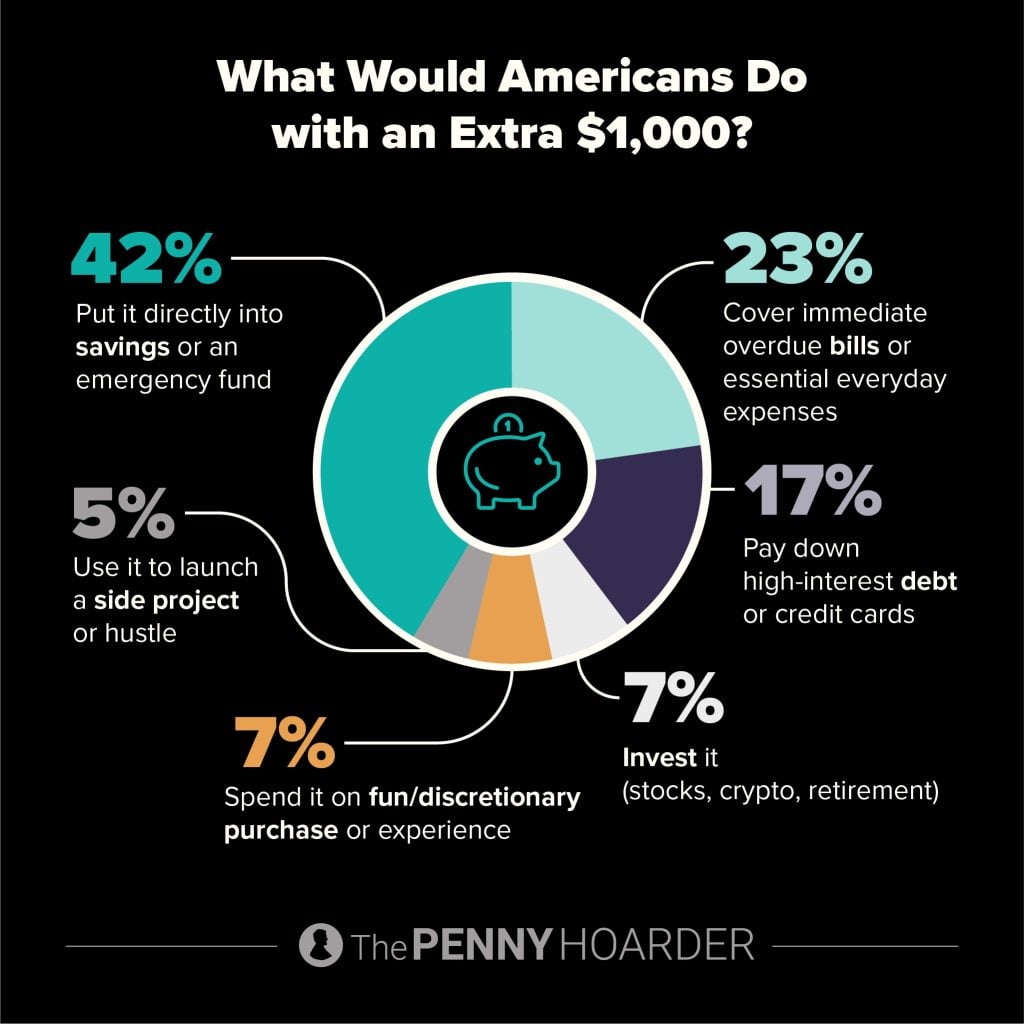
The 2025 survey found that two-thirds of Americans would’ve saved an unexpected $1,000 gift. In 2026, less than half say they’d save it but nearly one quarter of Americans say they’d use the windfall just to cover overdue bills or essential expenses like groceries or healthcare.
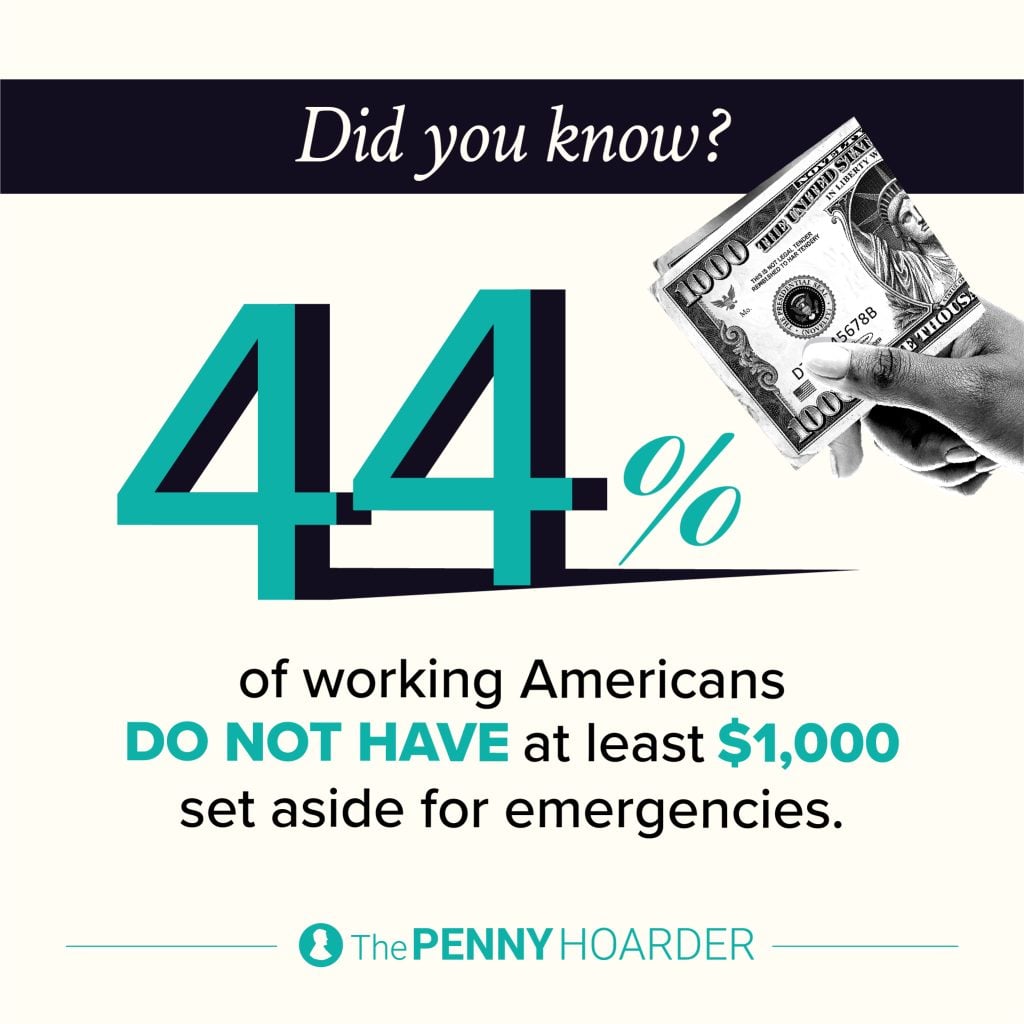
Only 35% have a dedicated emergency fund while 44% of Americans don’t have at least $1,000 to cover an emergency. Both figures worsened slightly from last year. In 2025, 37% said they have a dedicated emergency fund while 42% said they couldn’t cover a $1,000 emergency.
Meanwhile, 45% say they have completely drained their savings account at some point, similar to last year.
We surveyed 1,000 working Americans about their savings, income, financial stressors and the overall health of their finances. We found:
- 68% say more income is what would help them save more effectively, more than any budgeting tool, incentive or accountability structure vs. 2025’s 38%
- 62% are living paycheck-to-paycheck while 58% reported the same last year
- 70% rely on a second source of income to cover regular expenses vs. 47% in 2025
- 37% say “not enough income” is the biggest obstacle to saving, compared to 42% last year
The Paycheck-to-Paycheck Reality
The reality is that even more Americans are struggling to cover their bills in 2026.
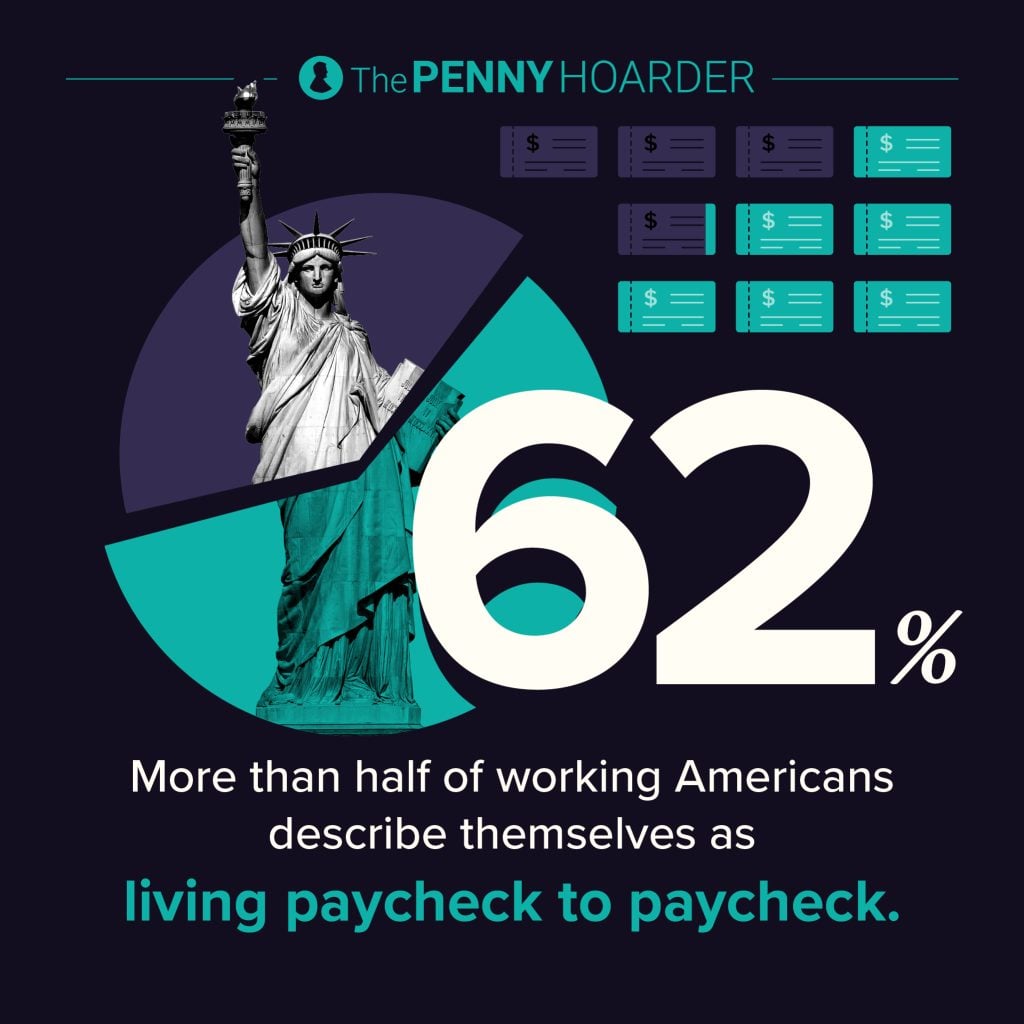
We asked survey respondents last year if they agreed with the statement: “I live paycheck to paycheck,” and 58% said they did. This year, 62% agree with the statement. That translates to about 8 million more Americans living paycheck to paycheck this year than were just a year ago.
Soaring costs for just about everything are likely the biggest contributing factor, which may be why so many of us are leaning on side hustles and other forms of assistance, like family. Last year, less than half of Americans (47%), said they rely on a second source of income to cover regular expenses. This year, a whopping 70% of respondents reported needing another income source. Of those:
- 24% have a second job or side hustle
- 24% rely on a spouse’s income
- 13% rely on another household member
- 13% get government assistance
And 4 in 10 survey respondents say they experienced a significant income loss in the past 12 months, compared to 33% in 2025.
Breaking the paycheck-to-paycheck cycle isn’t easy, but it’s possible by focusing on what you can do right now to help your financial situation. Setting aside a few dollars — whether to save or to pay down a high-interest debt — may not seem to make much of a difference this month. But adding a little more to your total consistently can create the kind of momentum that can help you finally get ahead of the next bill.
Why Aren’t Americans Saving More?
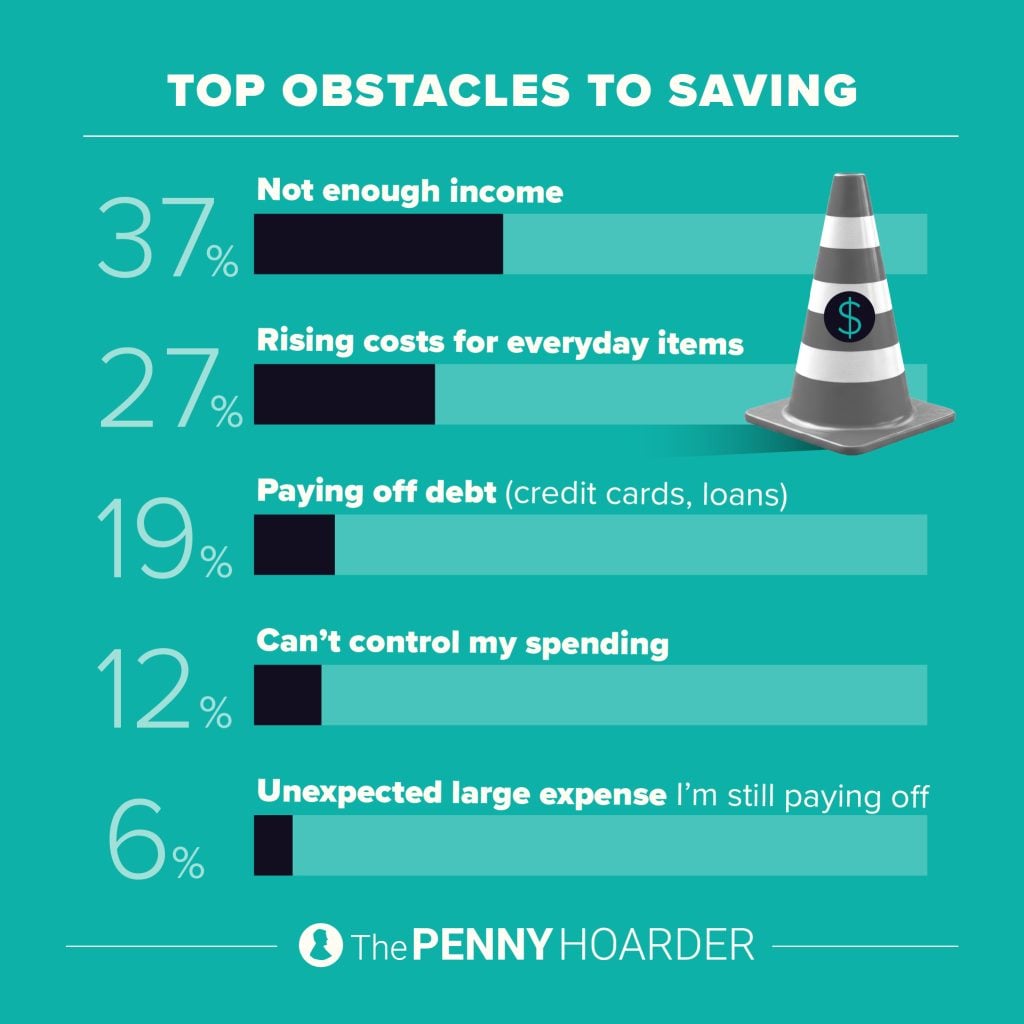
It’s not spending habits impeding Americans’ savings, it’s income — 37% say the biggest obstacle to saving is not enough income, while 27% say it’s rising costs of everyday items, compared to 42% and 34% last year, respectively.
And it’s no wonder — inflation has surged this year amid conflict in the Middle East as well as a global trade war. Gas prices this fall have come close to the record highs set in 2022. Meanwhile, food costs are up nearly 3% from a year ago.
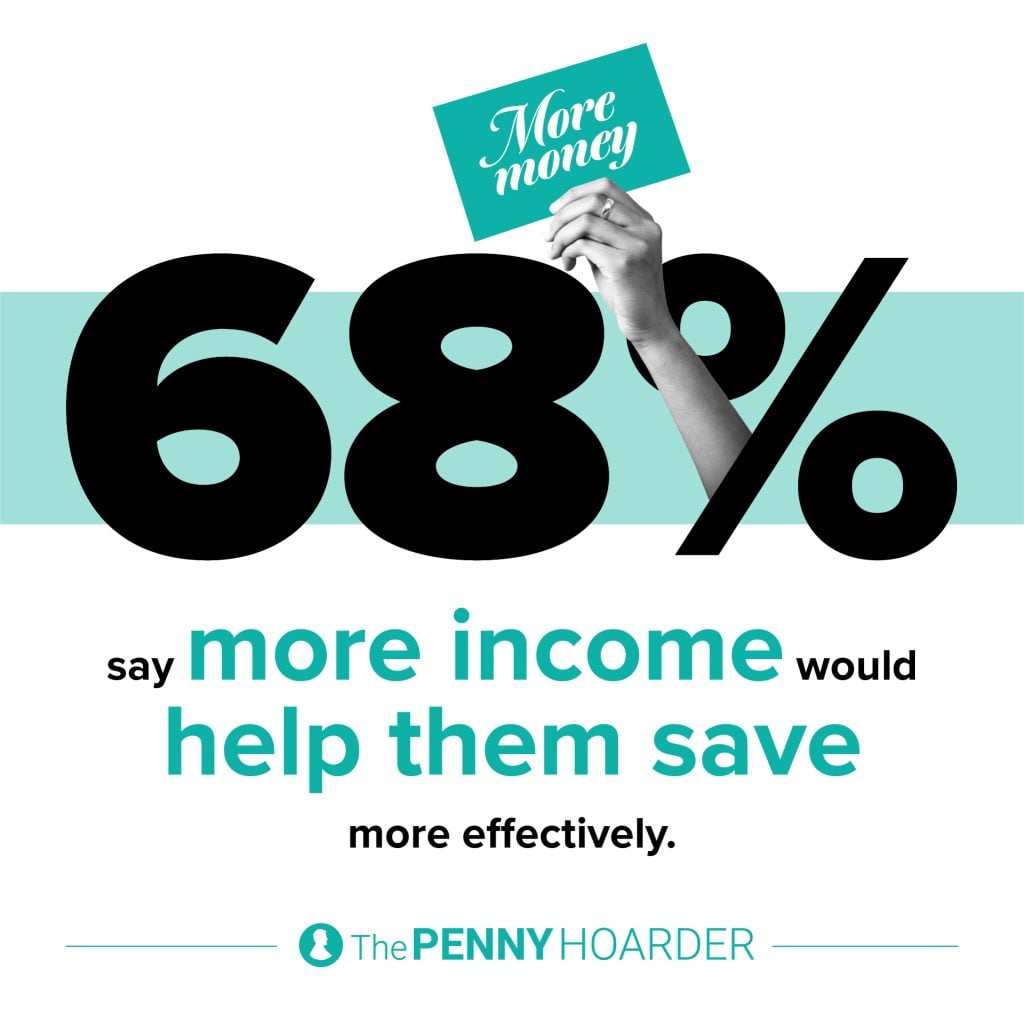
So what would ease the squeeze? More money, unsurprisingly — 68% say more income, not budgeting tools or financial education, would help them save most effectively. That’s up from 38% last year.
It makes sense then that side gigs are becoming more of a necessity than an optional income boost in this economy. In our 2026 Side Hustle survey, side hustlers earned an extra $1,275 per month. Most say they’d have trouble making ends meet otherwise.
Forty percent of respondents said they wouldn’t quit their side hustle even if their primary employer gave them a 20% raise, while 53% of respondents say they would struggle to cover essential expenses without side gigs.
How Much Should You Have in an Emergency Fund, and How Far Short Are Americans?
Cash reserves are hitting dangerously low levels for many of us. Of this year’s survey respondents, 14% say they have no emergency savings at all — that’s more than twice as many people who made the same statement a year ago.
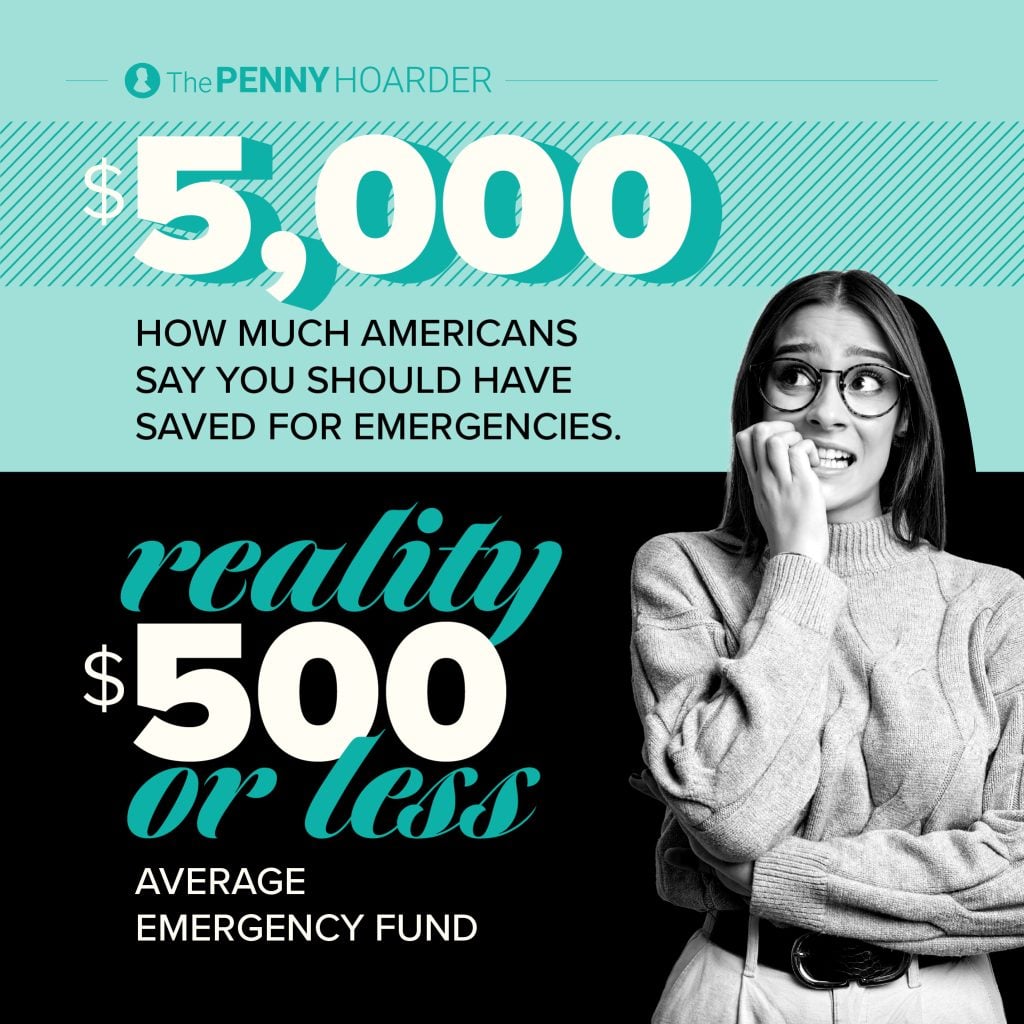
Survey respondents put an ideal emergency fund at $5,000. However, that’s an unrealistic goal for a lot of people right now — 4 in 10 say their emergency fund is $500 or less.
If you’re feeling overwhelmed by the thought of saving $5,000 (or any amount), start small. While tucking a few dollars in a jar each week may not seem like much, it can serve as a visual reminder of your progress, which can help motivate you to continue.
But we get it, emergencies don’t typically let you prepare for them. Consider alternative ways to cover an emergency expense — like selling your unused stuff — while you continue building your financial cushion.
Spending and Saving Habits
When it comes to a savings strategy, most Americans save what’s left over after paying their bills (44%) rather than setting money aside first (24%). It’s a habit that leaves little room for the unexpected.
Meanwhile, 21% say they have no savings strategy at all, or don’t know if they have one. That figure was 11% in the 2025 survey.
And, if given an unexpected $1,000, 42% say they’d save it, but 23% would need it to cover overdue bills or essentials. Last year, 67% of our respondents said they’d save it.
A savings strategy can be established in four steps. That’s not to say it’s easy, especially in our current financial reality. Here’s how to do it:
- Understand your spending. You can’t save money if you don’t know where you’re currently spending it.
- Decide if and where you can cut back.
- Automate your savings. This way you won’t even have to remember to save, it happens automatically.
- Build your savings.
We recommend depositing the cash in a high-yield savings account so compound interest can help grow your nest egg for you. And setting up direct deposit — even if it’s $5 or $10 every paycheck — can help you set aside money before you have a chance to spend it.
Types of Savings Accounts Americans Use
Even Americans who do save often keep their money in accounts earning little or no interest. In fact, 14% of survey respondents say they don’t have a savings account at all — an alarming increase from 0% who said they didn’t have an account last year.
And where you stash your money matters — 41% of respondents say they keep the bulk of their short-term savings in a checking account rather than a savings vehicle. Only 13% use a high-yield savings account, which allows you to save money and earn higher-than-average interest on it — especially amid rising interest rates.
Consider how much of a difference a HYSA can make:
Say you have $500 in cash, and you can commit to setting aside $50 each month. Over the course of two years, you’ll save $1,700 if you deposit it into a checking account earning no interest. But if you deposit it in an HYSA with a 4.0% APY, you’ll earn just over $87 in interest. Keep it up for five years, and you could earn more than $415. That’s money you didn’t have to work extra to earn — also known as passive income.
How Americans Cover Emergencies and Unexpected Costs
A flat tire or a minor medical bill is enough to expose how little cash most Americans have on hand. Only a quarter (26%) of survey respondents say they have enough savings to pay for small unexpected expenses, although that’s up from 19% last year. For a major expense, 37% say they’d reach for a credit card first.
And here’s the thing: Using an emergency fund is best, but having a credit card on hand for an unexpected expense isn’t an inherently bad thing. If you’re stuck with a broken-down car, for example, paying for a car repair with a credit card is a better alternative to a payday loan that gives you the cash fast but is designed to trap you in a cycle of debt with sky-high interest rates. The key to using a credit card is making a plan to pay off your balance quickly and to avoid putting other expenses on the card in the meantime.
But again, having an emergency fund is the safest way to cover unexpected expenses without ending up buried in debt.
Financial Stress and the Squeeze of Everyday Costs
Americans are stressed out about money. Our State of Savings survey respondents say, on a scale of 1-10, their average financial stress score is six. About 49% report stress levels at seven or higher.
These findings correspond with our Financial Anxiety Barometer, where we discovered that Americans spend 96 days a year worrying about money. That’s 26% of the year lost to financial stress.
As for what’s stressing Americans: One-third say not enough money is their single biggest stressor, and groceries and housing are essentially tied (27%) as the most expensive parts of people’s budgets.
With grocery prices the way they are, it can be hard to save at the grocery store. However, meal planning, switching to store brands, shopping sales and joining a warehouse club are all ways you can drive your food bill down.
Saving on housing can be a bit trickier. Rent and mortgage rates are increasing. Some strategies to save on housing include downsizing into something smaller, getting a roommate or moving to the suburbs. You can also look at ways to save on secondary housing costs, like electricity.
Will Holiday Spending Eat Into Savings This Year?
With savings already tight, 17% of respondents say they plan to cut back on holiday spending to protect their savings, and 15% don’t intend to spend on the holidays at all.
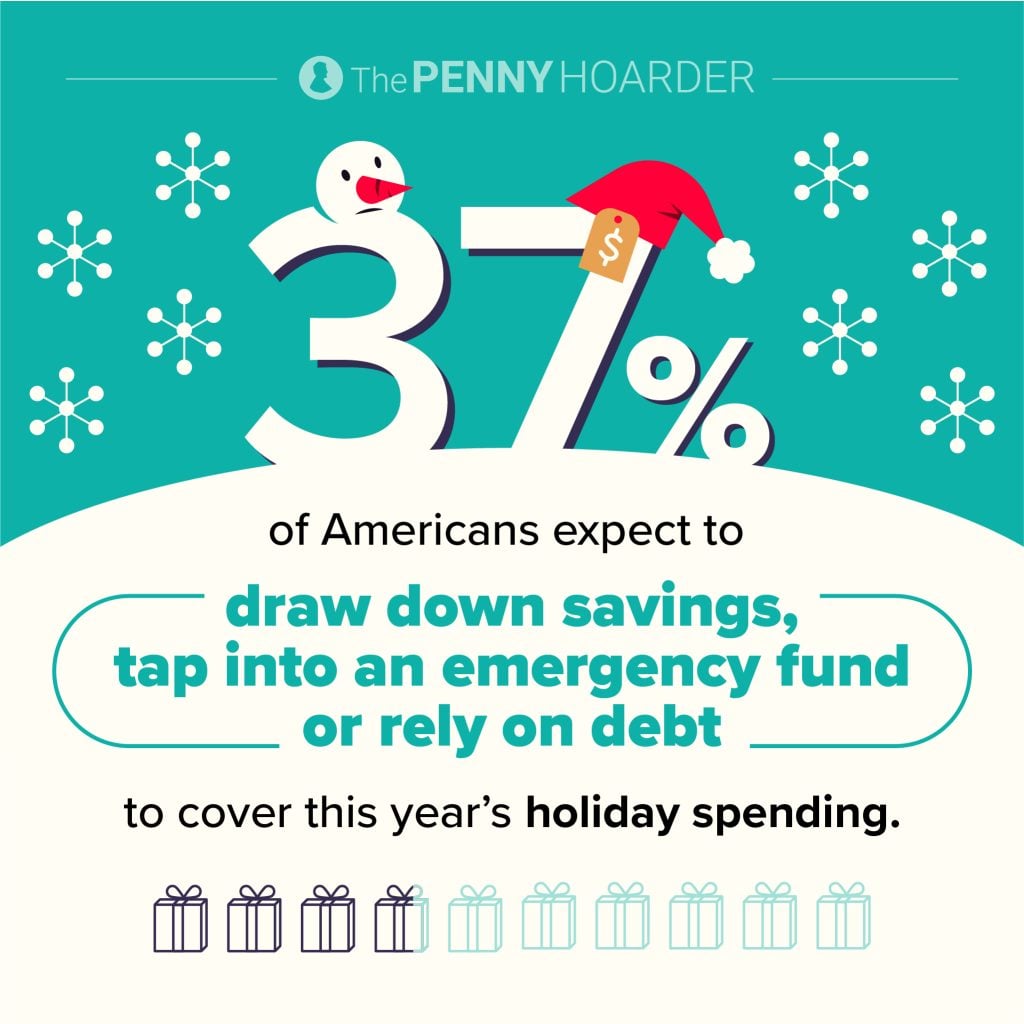
But we’re apparently not canceling Christmas just yet, as 37% of respondents expect to draw down or deplete savings or tap their emergency fund to cover holiday spending this year.
That aligns with findings from The Penny Hoarder’s 2026 State of Holiday Spending Report, which found that 43% of Americans admit to raiding their emergency funds in the past to cover holiday expenses.
A wiser alternative to emptying your emergency fund or relying on debt is creating a holiday budget or a sinking fund. That way, you can put aside money earlier in the year to cover holiday expenses and avoid starting 2027 in a financial hole.
The Penny Hoarder Managing Editor Katie Sartoris and Senior Managing Editor Tiffany Wendeln Connors are Certified Educators in Personal Finance.
Methodology
The Penny Hoarder surveyed 1,000 U.S. adults on Sept. 4, 2026, using Pollfish, and asked them questions related to saving money and their overall financial health. Results were post-stratified to better align with the U.S. adult population based on age, gender, region, and income. Post-stratified results, 1,000 U.S. adults (Pollfish, Q3 2026). Each table shows stratified percentages; multi-select questions total more than 100%.